

Hanoi Night Market: Shopping, Food and Culture Guide
Hanoi Night Market is one of the capital’s most iconic weekend attractions, offering visitors an authentic glimpse into Hanoi’s vibrant nightlife and rich cultural heritage. Every weekend, the streets of the Old Quarter come alive with hundreds of stalls selling local handicrafts, souvenirs, fashion items, and delicious Vietnamese street food. Combined with lively cultural performances and a festive atmosphere, the Hanoi Night Market attracts both locals and international travelers seeking an unforgettable evening experience. Join My Vietnam Tour as we explore everything you need to know about the Hanoi Night Market.
1. An overview of Hanoi Night Market
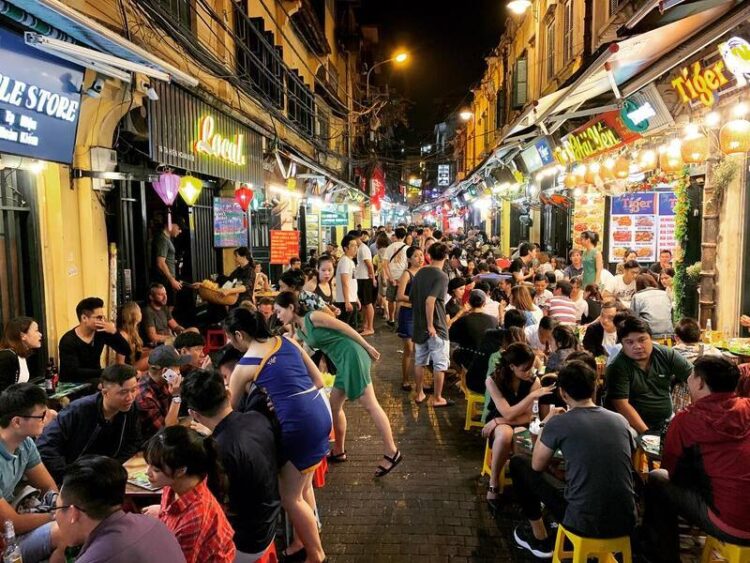
Hanoi Night Market, also referred to as the Old Quarter Weekend Market or Dong Xuan Night Market, stretches from Hang Dao Street to Dong Xuan Market in Hoan Kiem district and is places to visit in Hanoi. It operates only on Friday, Saturday and Sunday evenings, generally from 6:00 PM until close to midnight, with the busiest period falling between 7:00 and 10:00 PM. During these hours, the surrounding streets are closed to vehicles, turning the area into a pedestrian-only zone lined with stalls on both sides. Different sections of the market tend to specialize in different goods: clothing, toys, stationery and salted dried fruit are common along Hang Ngang, Hang Duong, Luong Van Can, Hang Ma and Hang Ca streets, while the stretch nearer Dong Xuan Market carries a broader mix of household goods and food stalls.
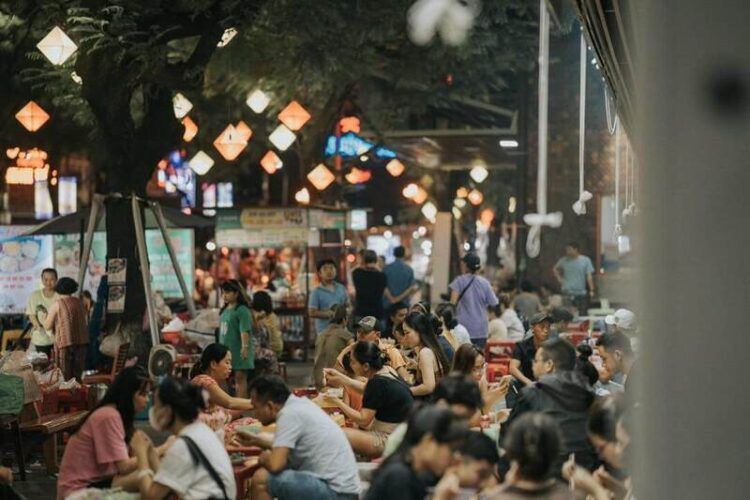
For many residents of Hanoi, a visit here is a routine part of the weekend rather than a special occasion. Families stroll together, children take part in simple street games such as sand painting, and couples wander hand in hand – a scene that gives the market as much of a social atmosphere as a commercial one.
The market is generally considered safe for tourists. As in any crowded public space, it is advisable to keep personal belongings secure and stay alert, particularly during peak hours when the lanes are at their busiest.
>> See more: Hanoi Train Street | The Complete Visitor’s Guide
2. What to do at Hanoi Night Market
Beyond browsing stalls, a visit to Hanoi Night Market usually turns into a small evening adventure of its own – part shopping trip, part food crawl, part open-air stroll. The sections below outline what visitors can expect from each side of the experience.
2.1. Shopping for Souvenirs and Everyday Goods
Shopping is one of the main draws of Hanoi Night Market, which is well known for its wide selection of goods at affordable prices. Bargaining is common practice here and is generally expected by both vendors and shoppers.
- Silk scarves, embroidered textiles and ao dai fabric
- Hand-carved wooden souvenirs and bamboo crafts
- Costume jewelry, leather bags and wallets
- Printed T-shirts and casual clothing
- Conical hats, toys, stationery and small home décor items
As product quality can vary between stalls, it is advisable to inspect items before purchasing, and buying multiple items from the same vendor often results in a better overall price. A reasonable starting point when negotiating is to offer roughly half the vendor’s initial asking price, with both sides typically settling somewhere in between.
2.2. Sampling Street Food
Food stalls make up a significant part of the market experience, offering many of Hanoi’s most recognizable dishes at prices generally lower than restaurants.
- Banh mi with grilled pork or patê
- Pho cuon, fresh rice-paper rolls with beef and herbs
- Bun cha, nem ran (fried spring rolls) and banh xeo (savory pancakes)
- Grilled skewers of meat and seafood
- Steamed glutinous rice (xoi), khuc cake and hot pot at the far end of the market
- Che (sweet dessert soup) and salted dried fruit known as o mai, sometimes served with salt and chili
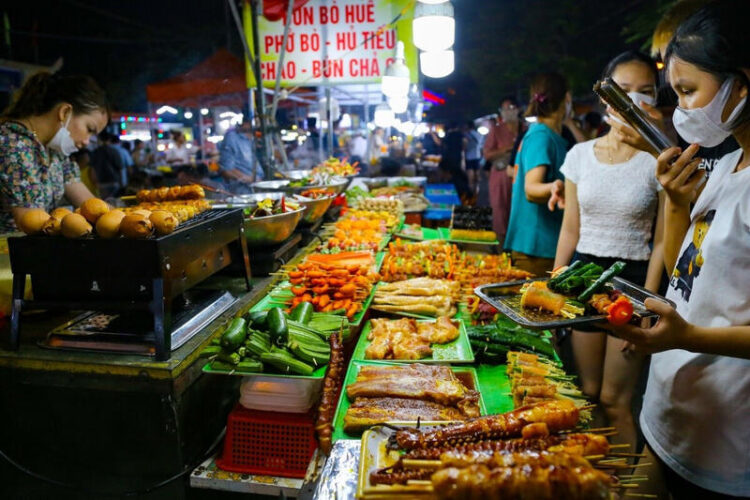
Egg coffee, a specialty of Hanoi made with whipped egg yolk and condensed milk, can also be found at nearby cafe for visitors who prefer to sit while taking in the surroundings. As most stalls rely on meat or fish sauce, vegetarian visitors are advised to confirm ingredients before ordering, or to choose options such as fresh fruit, sticky rice or che.
>> See more: Hanoi Railway Cafe | Where Every Sip Comes with a Side of Adrenaline
2.3. Strolling the Walking Street
Since the market sits within Hanoi’s pedestrian-friendly zone, many visitors simply use the evening to walk and explore the surrounding streets at a relaxed pace.
- Ta Hien Street: known for its bars and casual local beer, about 300 m from the main market stretch
- Ma May Street: home to a number of preserved traditional Hanoi houses
- Hang Gai Street: recognized for silk products and tailoring services
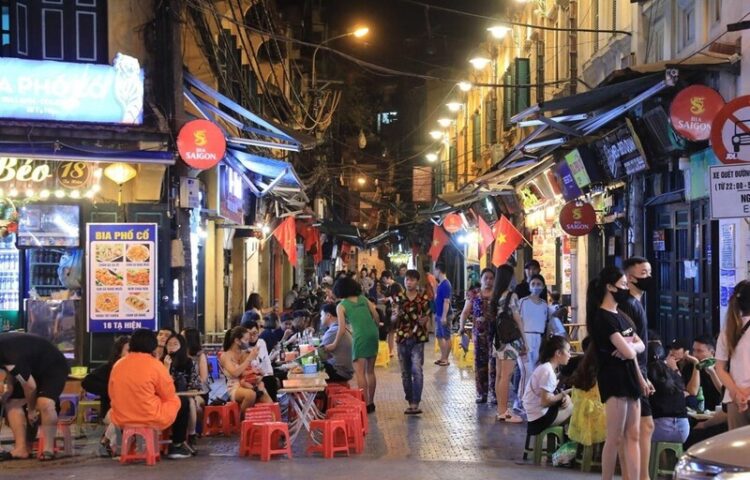
Nearby landmarks also make convenient stops before or after browsing the stalls, including Hoan Kiem Lake (around 1 km away), the Thang Long Water Puppet Theatre (about 600 m) and Ngoc Son Temple (roughly 950 m). Even without making a single purchase, wandering these lanes offers a clear sense of how the Old Quarter functions as both a living neighborhood and a commercial hub after dark.
2.4. Watching Street Performances
Hanoi Night Market is not limited to shopping and food; it also features live music, traditional dance and contemporary street performances, most commonly near Dong Kinh Nghia Thuc Square. These typically begin around 8:00 PM and continue for much of the evening, drawing crowds who stop simply to watch.
For photography, the period between roughly 6:30 and 7:00 PM tends to offer favorable lighting, as market lanterns are switched on while natural daylight is still present.
3. How to Get to Hanoi Night Market
As the market operates within a pedestrian-only zone during opening hours, it is worth planning transportation in advance.
- On foot: Visitors staying within the Old Quarter can typically reach the market directly, and walking remains the simplest option.
- By public bus: Several routes stop within walking distance of Hoan Kiem Lake, with fares starting from approximately 7,000 VND.
- By taxi or ride-hailing app: Services such as Grab operate throughout Hanoi, though vehicles cannot enter the walking street itself, so passengers may need to walk the final stretch.
A typical evening at the market costs between 200,000 and 500,000 VND (approximately 8-20 USD) per person for shopping and food, depending on individual spending. Visitors arriving from Noi Bai International Airport should allow 30 to 40 minutes by taxi to reach the Old Quarter, depending on traffic conditions.
Best places to stay in Hanoi: From Old Quarter to West Lake
4. Essential Tips for a Smooth Visit
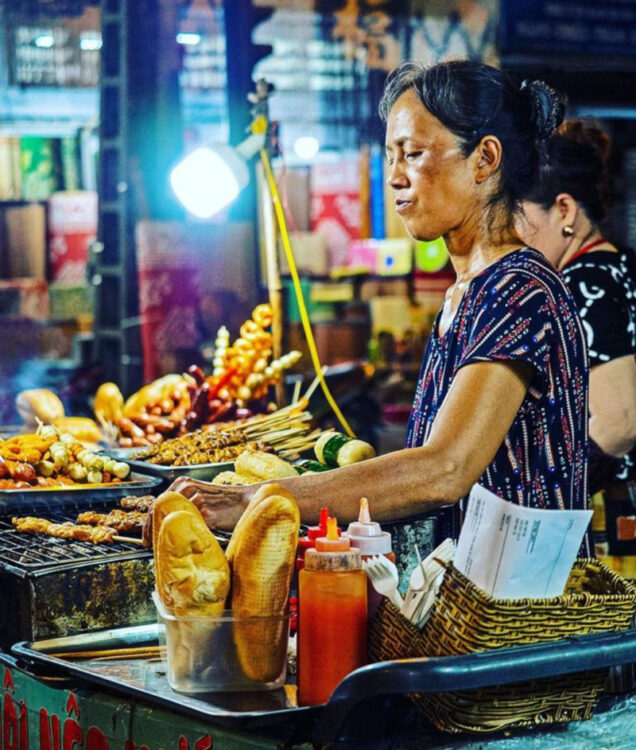
A few practical habits can help visitors get the most out of an evening at Hanoi Night Market:
- Carry cash, as most stalls do not accept card payments.
- Wear comfortable footwear, as the walking street covers a considerable distance.
- Keep valuables secure, particularly in crowded areas.
- Negotiate prices politely, as bargaining is a normal part of the experience.
- Arrive early in the evening for a wider selection of goods and more manageable crowds.
- Carry water, especially between April and September when evenings are warmer and more humid.
- Consider using a translation app, as English proficiency among vendors can vary.
5. Other Night Markets Worth Visiting in Hanoi
Hanoi Night Market is far from the only after-dark market in the city. Travelers with a bit of extra time may want to venture beyond the Old Quarter, where each market tells a slightly different story about how Hanoi shops, trades and lives once the sun goes down.
- Dong Xuan Market: established in 1889, this indoor market operates as a wholesale center during the day and transitions to food and souvenir stalls in the evening.
- Quang Ba Flower Market: most active between approximately 1:00 and 5:00 AM, this wholesale flower market is of particular interest to photographers.
- Long Bien Market: a wholesale produce market operating around the clock, with peak trading activity in the early morning hours before dawn.
- Hang Da Market: a quieter, indoor market within the Old Quarter, known for secondhand clothing, ceramics and a small food court.
- Nha Xanh Market (Cau Giay): popular among students for affordable clothing and secondhand electronics, located approximately 8 km from Hoan Kiem Lake.
- Linh Nam Night Market: roughly 8 km from the Old Quarter, this smaller, less touristy market is known for handmade woven baskets and craft items.
- Cho Phung Khoang: about 10 km from the Old Quarter and popular with university students, this market specializes in vintage clothing and budget accessories.
None of these markets charge an entrance fee and each is generally accessible by taxi or ride-hailing service from central Hanoi, making it easy to combine one of them with a visit to Hanoi Night Market itself.