

20+ Places to Visit in Hanoi That Attract Tourists
Hanoi is not only Vietnam’s thousand-year-old capital, but also a captivating destination where history, culture, and modern city life blend harmoniously. From ancient architectural landmarks and charming old streets to vibrant entertainment spots and photogenic attractions, each place to visit in Hanoi tells its own unique story and invites travelers to explore deeper. In this article, My Vietnam Tours will suggest places to visit in Hanoi to help you plan a complete and memorable journey.
Historic and Cultural Landmarks in the City Center
Hanoi’s downtown core holds the highest concentration of must-see sites, most within walking or short taxi distance of each other. These six landmarks tell the story of the city across more than a thousand years, from imperial dynasties to the French colonial era and the 20th-century fight for independence.
1. Hoan Kiem Lake and the Old Quarter
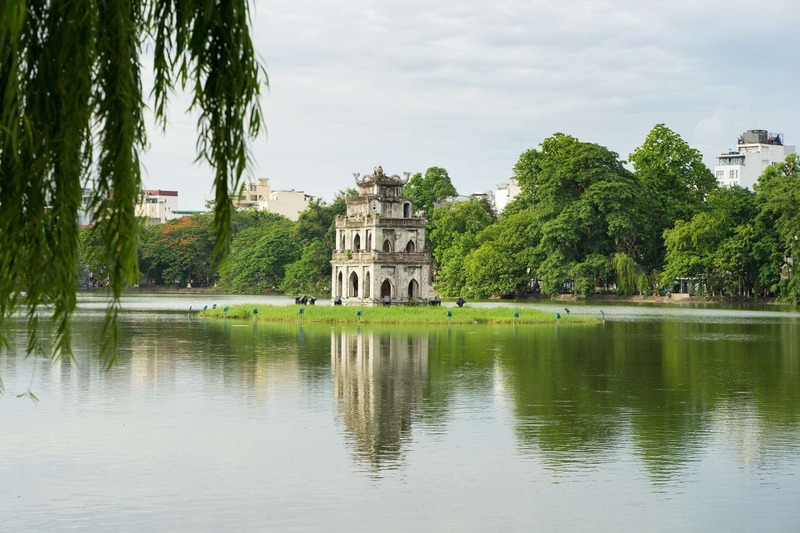
Hoan Kiem Lake, whose name means “Lake of the Returned Sword,” is the symbolic heart of Hanoi. Locals gather here every morning to walk, stretch, and practice tai chi, while the red Huc Bridge leads to Ngoc Son Temple on a small island in the water. Wrapping around the lake’s north and west sides is the Old Quarter, a maze of 36 historic streets where each lane traditionally specialized in one trade, from silk to silver to herbal medicine. Wandering here is one of the simplest and most rewarding things to do in Hanoi: expect narrow shopfronts, sidewalk food stalls, and motorbikes weaving past century-old houses.
- Best for: first-time visitors, photography, evening walks
- Cost: free to walk around; entry to Ngoc Son Temple costs a small fee
- Good to know: on weekend evenings, several streets around the lake close to traffic for a pedestrian zone with live music and street performers
See more: Best places to stay in Hanoi – From Old Quarter to West Lake
2. Ho Chi Minh Mausoleum and Ba Dinh Square
Ba Dinh Square is where President Ho Chi Minh read Vietnam’s Declaration of Independence in 1945, and it remains the political heart of the country. The mausoleum itself houses his preserved body and draws a steady stream of visitors who file past in respectful silence. The complex extends to the nearby Presidential Palace, Ho Chi Minh’s stilt house, and a one-pillar pagoda, so most travelers spend half a day exploring the wider grounds rather than the mausoleum alone.
- Best for: history enthusiasts, understanding modern Vietnamese history
- Cost: free entry to the mausoleum; small fees apply for some surrounding sites
- Good to know: the mausoleum is closed on Mondays and Fridays, and visitors must dress modestly and leave cameras and bags at a checkpoint
3. Temple of Literature (Van Mieu)
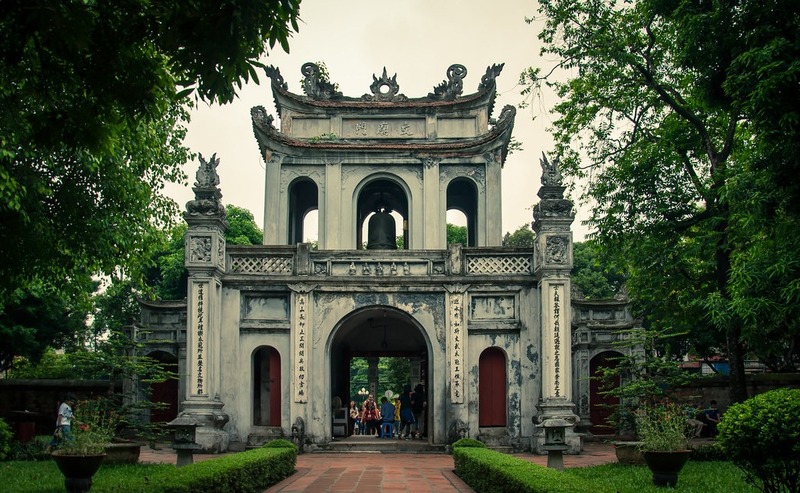
Built in 1070, the Temple of Literature served as Vietnam’s first national university and remains a powerful symbol of the country’s scholarly tradition. Stone stelae resting on turtle statues record the names of doctoral graduates from imperial exams centuries ago, and students still visit before exam season to pray for good results. The Khue Van Cac pavilion, with its distinctive octagonal roof, has become one of the most photographed structures in Hanoi and appears on the back of the 100,000-dong banknote.
- Best for: culture and architecture lovers, students
- Cost: around 70,000 VND for adults
- Good to know: audio guides in foreign languages are available for an extra fee
4. Imperial Citadel of Thang Long
Recognized by UNESCO as a World Heritage Site, the Imperial Citadel of Thang Long preserves more than a thousand years of continuous political power, from the Ly Dynasty through to the 20th century. Highlights include the North Gate, Doan Mon Gate, the Kinh Thien Palace foundations, and an active archaeological site where excavations continue to reveal artifacts beneath the modern city. It’s a quieter, less crowded alternative to some of Hanoi’s busier landmarks.
- Best for: history buffs, UNESCO site collectors
- Cost: around 100,000 VND for adults
- Good to know: the site is large and mostly outdoors, so visiting in the early morning helps avoid the midday heat
5. Hoa Lo Prison
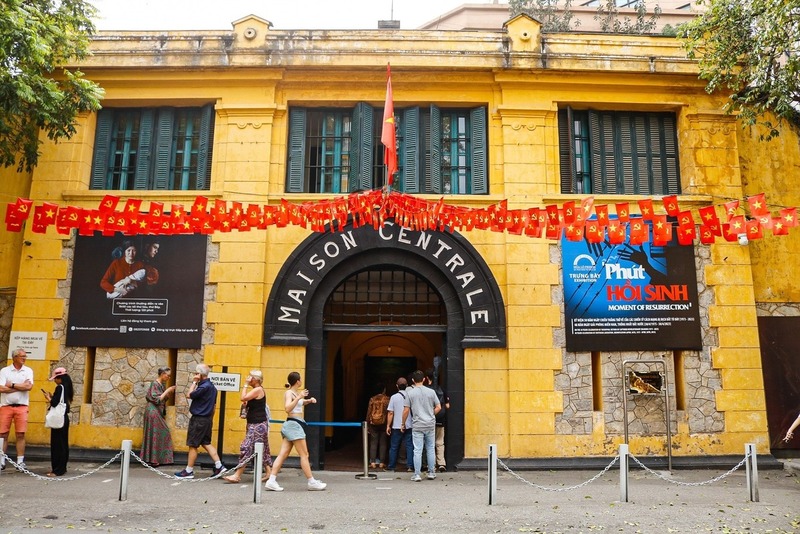
Built by French colonists in 1896, Hoa Lo Prison once held Vietnamese revolutionaries and later, during the Vietnam War, American prisoners of war who sarcastically nicknamed it the “Hanoi Hilton.” Today the site operates as a museum, with preserved cell blocks, guillotine, and exhibits that walk visitors through both eras of its history. It’s a sobering stop, but one that adds real depth to understanding Vietnam’s path to independence.
- Best for: history and war history enthusiasts
- Cost: around 50,000 VND for adults
- Good to know: some exhibits include graphic content about wartime conditions, so it may not suit younger children
6. St. Joseph’s Cathedral (Hanoi Cathedral)
Tucked into a small square in the Old Quarter, St. Joseph’s Cathedral was completed in 1886 and remains one of the oldest Gothic-style buildings in the city, with twin bell towers and stained-glass windows that recall European cathedrals. The square in front is one of Hanoi’s favorite gathering spots, especially at dusk when the surrounding cafes fill with locals sipping the city’s famous lemon tea.
- Best for: architecture fans, café hopping
- Cost: free to view from outside; mass times restrict interior access
- Good to know: this is an active place of worship, so modest dress is appreciated
Museums That Bring Vietnamese History and Culture to Life
Hanoi’s museums range from serious archaeological collections to immersive cultural villages, and they’re a smart way to fill a rainy afternoon or deepen what you’ve already seen at the city’s historic sites.
1. Vietnam Museum of Ethnology
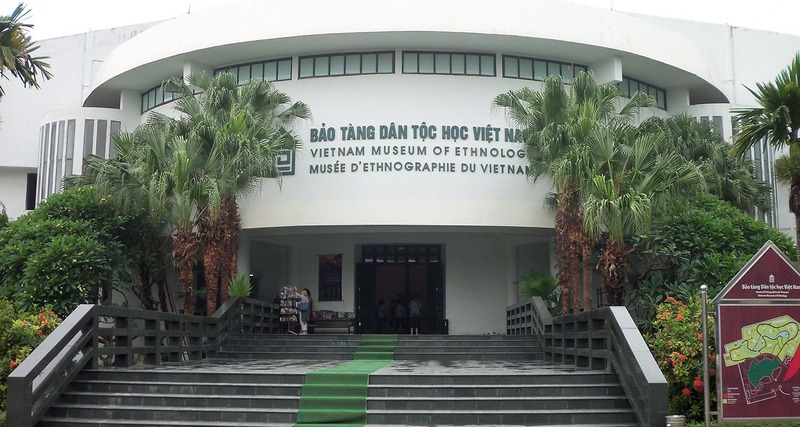
This museum is widely considered one of the best in Southeast Asia, with indoor galleries covering the customs, costumes, and daily life of Vietnam’s 54 official ethnic groups. The real highlight is the outdoor garden, where full-scale replica houses, including stilt houses and a Bahnar communal hall, let visitors step inside traditional architecture from across the country. Water puppet shows are sometimes performed here too, adding a live cultural element to the visit.
- Best for: families, anyone curious about Vietnam’s ethnic diversity
- Cost: around 40,000 VND, with discounts for children
- Good to know: it’s located outside the city center, so budget 30-40 minutes for the taxi ride each way
2. Vietnamese Women’s Museum
This museum traces the role of women in Vietnamese history, from wartime contributions to traditional family life and contemporary fashion. Exhibits combine photography, personal artifacts, and multimedia displays in a modern, well-curated space that’s praised by travelers as one of the more thoughtfully designed museums in the city.
- Best for: travelers interested in social history and gender studies
- Cost: around 40,000 VND for adults
- Good to know: located close to Hoan Kiem Lake, making it easy to combine with a lake walk
Lakes, Parks and Scenic Spots to Slow Down
Hanoi moves fast, but its lakes and green spaces give visitors a chance to slow down, especially in the late afternoon when the light turns golden over the water.
1. West Lake (Ho Tay)
As Hanoi’s largest lake, West Lake offers a completely different pace from the bustling Old Quarter. A scenic road circles the water, popular with cyclists and joggers, while waterside restaurants serve grilled snacks and local specialties as the sun sets. The lake is also home to several of the capital’s most distinctive temples, making it an easy pairing with a half-day of sightseeing.
- Best for: sunset views, cycling, casual dining
- Cost: free; food and drink prices vary by venue
- Good to know: bike rentals are available near the lakeside, a relaxed way to cover the long shoreline
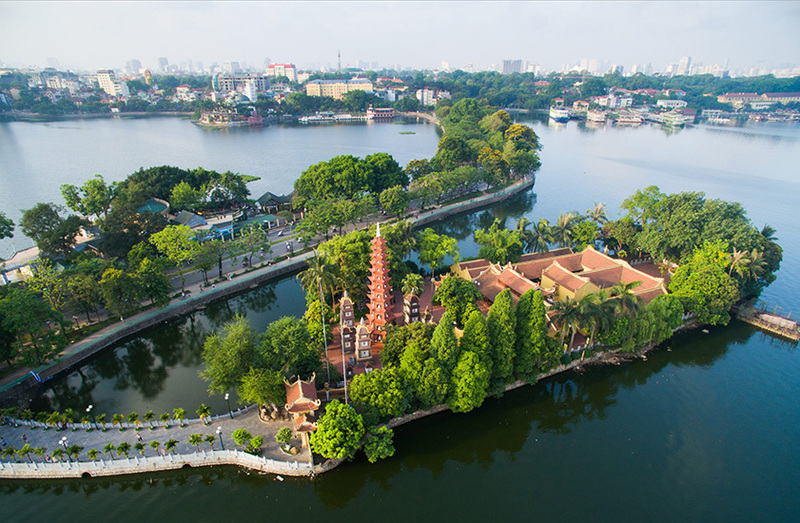
2. Tran Quoc Pagoda
Sitting on a small peninsula on West Lake, Tran Quoc Pagoda is considered the oldest Buddhist temple in Hanoi, with roots tracing back over 1,400 years. Its red-roofed tower rises in tiers above the water and was once named among the world’s most beautiful pagodas by a UK newspaper. Early morning is the best time to visit, when the lake is calm and the temple grounds are quiet.
- Best for: spiritual travelers, sunrise photography
- Cost: free entry
- Good to know: cover your shoulders and knees before entering, as with any active pagoda
3. Long Bien Bridge
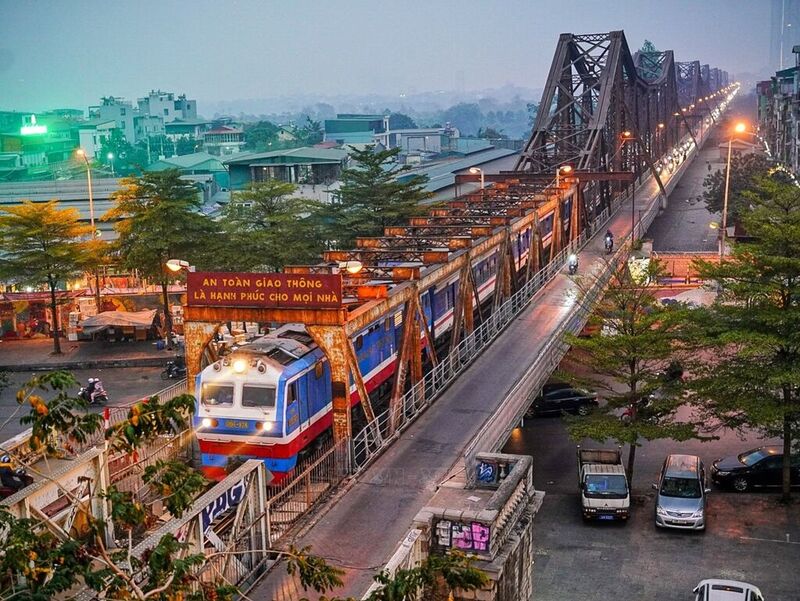
Built by the French in 1902 across the Red River, Long Bien Bridge is a steel structure with a distinctly industrial, century-old character. It carried enormous strategic weight during wartime and survived repeated bombing, making it as much a historical landmark as a transport route today. Photographers favor the bridge at sunrise and sunset, when the ironwork frames the river and the trains that still rumble across it.
- Best for: photographers, history fans
- Cost: free to walk across
- Good to know: a dedicated pedestrian lane runs alongside the road and rail traffic, so stay within it for safety
4. Ceramic Mosaic Mural Road
Created in 2008 to mark Hanoi’s 1,000th anniversary, this mural stretches for several kilometers along the dike protecting the Red River and was recognized by Guinness World Records as the longest ceramic mosaic in the world. Each section reflects a different artistic theme, from traditional patterns to abstract designs contributed by local and international artists, making it a colorful and unusual stop for anyone interested in public art.
- Best for: art lovers, casual photo stops
- Cost: free
- Good to know: the mural runs along a busy road, so it’s best appreciated on foot in short sections rather than all at once
Street Food, Markets and Nightlife
No visit to Hanoi is complete without eating on the street, browsing a local market, and experiencing the city after dark, when the Old Quarter takes on an entirely different energy.
1. Train Street
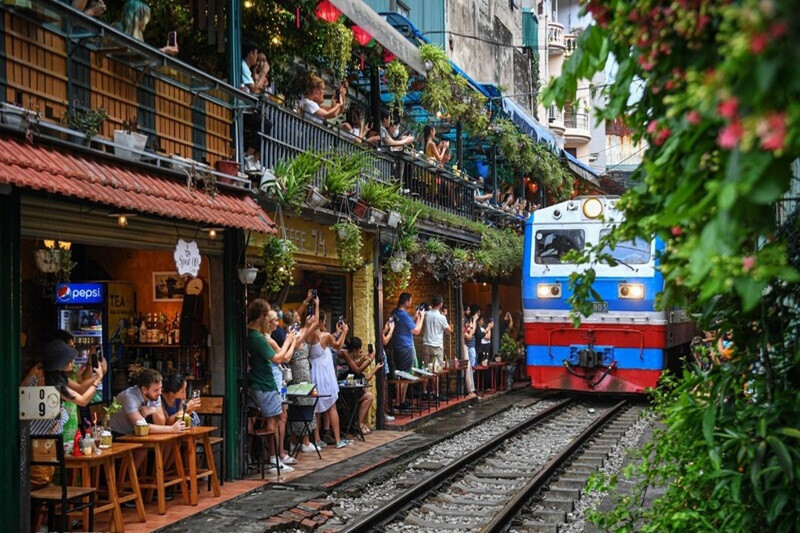
Hanoi Train Street is exactly what it sounds like: a narrow residential lane where the train tracks run so close to people’s front doors that cafes set up tables just inches from the rails. Several times a day, a warning horn sounds and shopkeepers quickly clear tables before the train rumbles through at close range, then everything resumes as normal. It’s become one of Hanoi’s most talked-about curiosities, though access has tightened in recent years for safety reasons, so check current rules before visiting.
- Best for: unique photo opportunities, curious travelers
- Cost: free to visit; cafes charge for drinks
- Good to know: always follow staff instructions when the train approaches and never stand on the tracks
2. Ta Hien Street (Beer Street)
Known locally as the street that never sleeps, Ta Hien comes alive after sunset with plastic stools spilling onto the sidewalk, cheap draft beer, and a steady stream of grilled skewers and other street snacks. It draws a mix of backpackers, expats, and locals, making it one of the easiest places in Hanoi to strike up a conversation over a cold glass of bia hoi.
- Best for: nightlife, meeting other travelers
- Cost: draft beer typically costs 10,000-20,000 VND per glass
- Good to know: the street gets busiest from around 8 p.m. on weekends
3. Dong Xuan Market
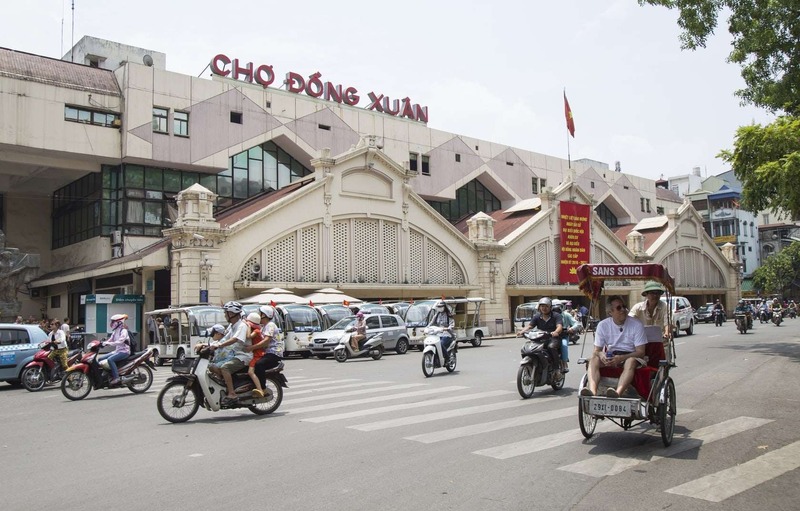
As one of Hanoi’s largest and oldest markets, Dong Xuan sells everything from clothing and household goods to dried foods and souvenirs across multiple floors. Prices here run lower than in tourist-focused shops, though bargaining is expected. The streets surrounding the market are also packed with food stalls serving Hanoi specialties, making it easy to combine shopping with a meal.
- Best for: souvenir shopping, local market atmosphere
- Cost: free entry; prices vary by item and negotiation
- Good to know: keep a close eye on belongings, as with any crowded market
4. Hanoi Opera House
Modeled after the Palais Garnier in Paris but built on a smaller scale, the Hanoi Opera House has hosted performances since 1911 and remains one of the city’s grandest colonial-era buildings. Visitors can admire the neoclassical facade from the square outside or buy tickets to a classical music, ballet, or theater performance for a closer look at the gilded interior.
- Best for: architecture fans, performing arts enthusiasts
- Cost: free to view from outside; performance tickets range from about 120,000 to 400,000 VND
- Good to know: the surrounding square is a popular evening photo spot even if you skip a show
Easy Day Trips From Hanoi
If your schedule allows an extra day, a short trip outside the city center reveals a very different side of the region, from a centuries-old craft village to misty mountain forests.
1. Bat Trang Ceramic Village
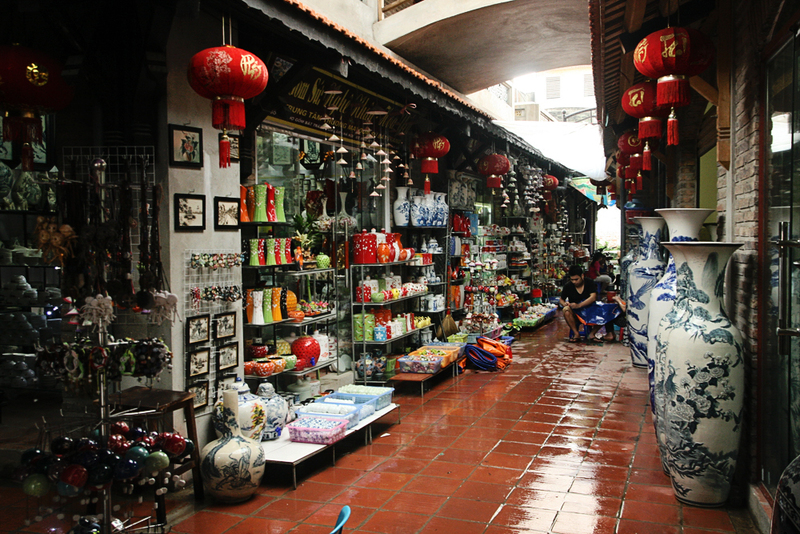
About 30 minutes from central Hanoi, Bat Trang has been producing ceramics for hundreds of years and remains one of Vietnam’s most famous craft villages. Visitors can tour workshops, watch artisans shape clay on a wheel, try painting their own piece, and shop for finished ceramics at prices well below what’s charged in city boutiques.
- Best for: families, craft and souvenir shopping
- Cost: free to walk around; a hands-on pottery session costs roughly 50,000-150,000 VND
- Good to know: ceramics here can be shipped internationally if you buy in larger quantities
2. Duong Lam Ancient Village
Duong Lam preserves the architecture of a traditional northern Vietnamese village, with laterite-stone houses, ancient communal wells, and gates that date back hundreds of years. It offers a quiet contrast to Hanoi’s energy, and renting a bicycle to explore the lanes between rice paddies is one of the most relaxing things to do near the capital.
- Best for: slow travel, cycling, rural scenery
- Cost: around 20,000 VND entry fee
- Good to know: the village is roughly an hour’s drive from central Hanoi, best visited as a half-day or full-day trip
3. Ba Vi National Park
Ba Vi National Park offers pine forests, cooler mountain air, and panoramic views from its peak, a welcome break from Hanoi’s heat and traffic. Trails suit both casual walkers and more committed hikers, and the park is a popular spot for picnics and overnight camping among local visitors.
- Best for: hiking, nature lovers, escaping the heat
- Cost: entry fee ranges from about 10,000 to 60,000 VND depending on the area visited
- Good to know: bring proper shoes, as some trails involve steep, uneven terrain
4. Perfume Pagoda (Chua Huong)
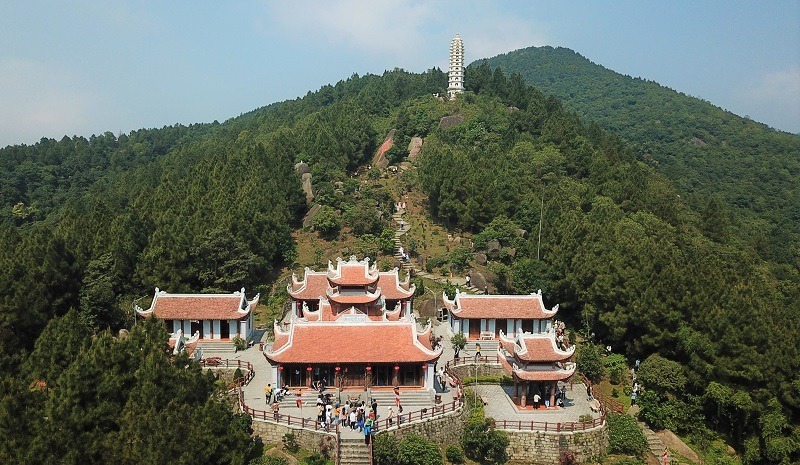
Roughly 70 kilometers from Hanoi, the Perfume Pagoda complex combines a boat ride along the Yen Stream with a cable car or hike up to a cave temple tucked into limestone cliffs. It’s one of northern Vietnam’s most significant pilgrimage sites, drawing large crowds during the spring festival season, but it’s worth visiting any time of year for its dramatic natural setting.
- Best for: spiritual travelers, scenic boat rides
- Cost: boat and cable car tickets typically cost a combined 150,000-250,000 VND
- Good to know: visiting on a weekday outside festival season means a far quieter, more peaceful experience