

Trang An Vietnam: A Complete Guide to Vietnam’s UNESCO Gem
Have you ever imagined yourself gliding gently on a small boat through crystal-clear waters that mirror towering limestone karsts, drifting into mysterious caves before emerging once again into the daylight? This unforgettable experience awaits you at Trang An Vietnam, a UNESCO World Heritage Site located in Ninh Binh Province, just a two-hour drive from Hanoi. Famous for its breathtaking landscapes, winding waterways, and rich cultural and historical heritage, Trang An Vietnam is one of the country’s most iconic travel destinations. In this guide, My Vietnam Tour will introduce everything you need to know about Trang An Vietnam, from its unique attractions to the must-try experiences that will help you plan an unforgettable trip.
1. What Is Trang An Vietnam? Inside the UNESCO Heritage Complex
Trang An earned UNESCO recognition in 2014, making it Vietnam’s first mixed World Heritage Site honored for both natural and cultural value. The name is believed to trace back to ancient seafaring communities who once navigated these waterways, and centuries later, the same region became the seat of power when Emperor Dinh Bo Linh established the Hoa Lu capital here in 968 AD. That layering of geology and history is what sets Trang An apart from Vietnam’s other karst landscapes: you’re not just admiring scenery, you’re floating through a living timeline.
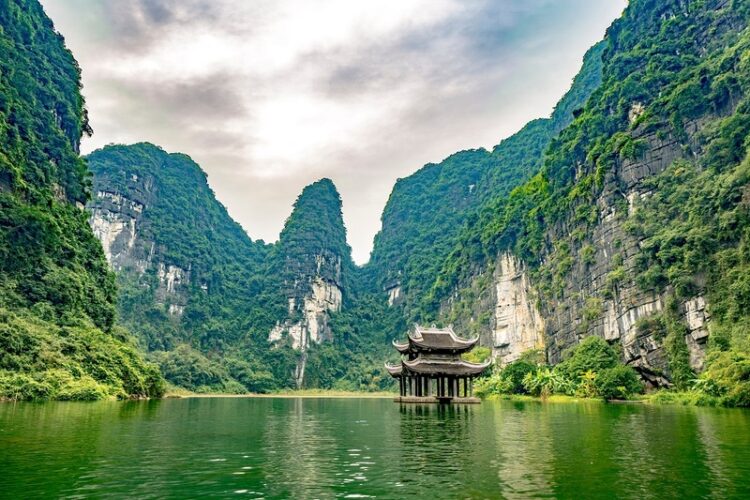
Before diving into logistics, here are the essentials worth knowing about Trang An Vietnam:
- Location: Ninh Binh province, about 90 km from Hanoi and 7 km from Ninh Binh City center
- Recognition: Vietnam’s first UNESCO Mixed World Heritage Site, listed in 2014
- Landscape: towering limestone mountains, quiet winding rivers, and roughly 100 dry and water-filled caves
- Nickname: often called the “inland Ha Long Bay” for its karst peaks reflected in glassy water
2. How to Get to Trang An Vietnam and When to Visit
Reaching Trang An Vietnam is straightforward, whether you’re coming from Hanoi or already based in Ninh Binh City. The table below breaks down the most common options so you can pick what suits your budget and schedule:
|
Transport |
From Hanoi |
From Ninh Binh City |
|
Taxi |
1.5–2 hrs, ~USD 46–61/car |
10–15 min, ~USD 4–6 |
|
Limousine bus |
1.5–2 hrs, ~USD 10–14/person |
N/A |
|
Motorbike rental |
2.5–3 hrs, ~USD 4–12/day |
15–20 min, ~USD 3–8/day |
For most independent travelers, a limousine bus or train from Hanoi followed by a short taxi ride from Ninh Binh City strikes the best balance of comfort, cost, and flexibility. Once you arrive, exploring the heritage complex itself is only possible by boat, which is the signature way to experience Trang An.
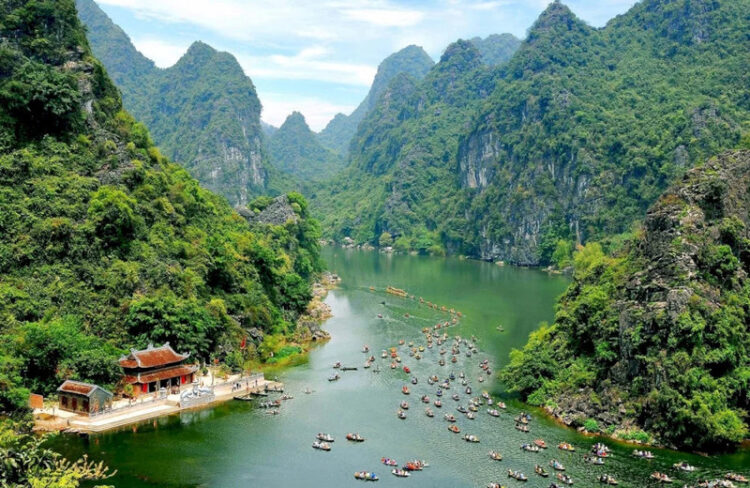
The dry season, from October to April, is widely considered the best time to visit Trang An Vietnam, thanks to cooler air, minimal rainfall, and soft early-morning or late-afternoon light that flatters every photo. That said, each season brings its own character:
- Spring (Jan–Mar, lunar calendar): local festivals celebrating the Lunar New Year fill the complex with cultural energy
- Summer (Apr–Jun): bright sunshine and blooming lotus ponds add bursts of pink to the green valleys
- Autumn (Jul–Sep): a quieter season, with a centuries-old persimmon tree bearing fruit near Phu Khong Temple
- Winter (Oct–Dec): early morning mist wraps the ancient temples, joined by red water lilies along the riverbanks
3. Top Experiences: Boat Rides, Mystical Caves, and Ancient Temples
A slow boat ride is the heart of any visit to Trang An Vietnam. Rowed gently by local boatmen and women, the wooden sampans wind through five official routes, each lasting roughly two to three hours and combining a different mix of caves and riverside temples. Some routes lean into history, weaving past nine caves and three spiritual landmarks in one journey, while others prioritize scenery, passing photogenic spots like Thuy Dinh Pavilion and Phoenix Mountain.
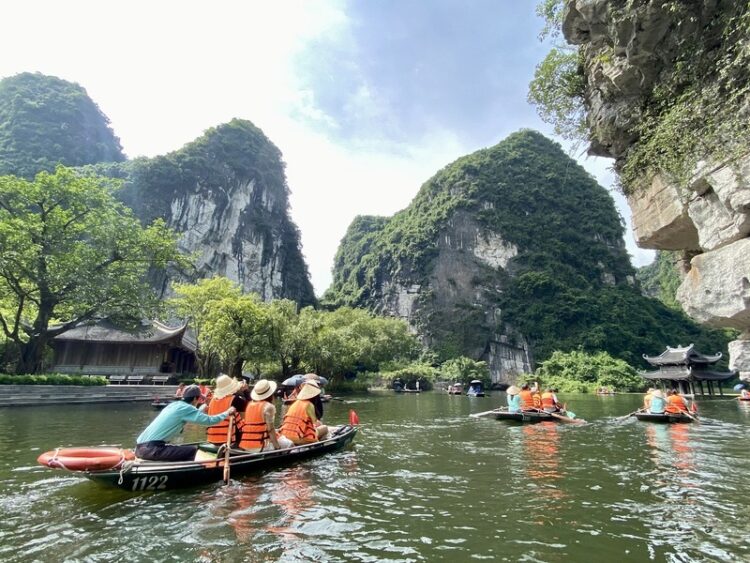
The cave network itself is staggering: close to 50 dry caves and 50 water-filled caves wind beneath the karst. A few stand out. Mua Caves reward the climb of roughly 500 stone steps with one of the most iconic viewpoints in all of Vietnam. The paired Dark Cave and Bright Cave symbolize a journey from darkness into enlightenment, a passage many visitors say is the most memorable stretch of the whole trip. Ba Giot Cave carries a charming local legend: let three drops of water fall onto your palm from its ceiling, and good fortune is said to follow.
History runs just as deep. Nearby, the Hoa Lu ancient capital preserves temples dedicated to the Dinh and Le dynasty kings, while Tran Temple, reachable only after passing through the Dark and Bright Caves and climbing roughly 175 stone steps, is considered the spiritual core of the entire complex.
A Few Honest Notes Before You Go
Trang An’s popularity is well earned, but it does mean boat queues and crowded photo spots, especially by mid-morning. Boat rides also run long, and the wooden bench seating has no backrest, so if you’re prone to back or knee discomfort, bring a small cushion. Booking a guided tour also helps you skip the confusion of the boarding area, where lines and routes aren’t always clearly marked for independent travelers.
4. Kayaking, Cycling, and Nearby Bai Dinh Pagoda
For a more active alternative to the traditional boat ride, kayaking lets you set your own pace through Trang An’s waterways. Single kayaks rent for roughly USD 7–15 and double kayaks for USD 13–15, over two official routes lasting two to three hours; one passes the film set once used for Kong: Skull Island, while the other winds through Trinh Temple and Dark Cave toward Ngoc Mountain.

Cycling is another relaxed way to soak up the countryside, with bike rentals running from about USD 2 for an hour to USD 7 for a full day. Popular routes link Tam Coc, Bich Dong, and Hoa Lu, threading past rice paddies and karst peaks at a gentle pace.
Just a short drive away, Bai Dinh Pagoda is worth adding to your itinerary. Spread across roughly 1,700 hectares, the complex holds several regional records, including the largest gold-plated bronze Buddha statue in Asia and the longest corridor of Arhat statues on the continent, making it one of the most significant Buddhist sites in northern Vietnam.
5. Honest Tips for a Smooth Trang An Vietnam Trip

Trang An Vietnam rewards visitors who plan ahead. A little preparation turns a potentially crowded, tiring day into one of the highlights of your entire Vietnam trip, so here’s what to keep in mind before you set off:
- Time it right: arrive before 9:00 AM or return after 3:00 PM, when the water is calmer, the light is softer for photos, and far fewer boats crowd the popular bends in the river
- Prepare your body for the ride: the standard boat routes run two to three hours on a flat wooden bench with no backrest, so bring a small cushion or seat pad if you have back, hip, or knee sensitivity, and plan to shift position gently rather than stand
- Pack for sun and water: sunscreen, a hat, sunglasses, and a refillable water bottle make a real difference once you’re a couple of hours into the trip with no shade on the river
- Dress and behave respectfully at sacred sites: cover shoulders and knees when visiting temples and caves, keep your voice low, and follow any signage around ritual areas
- Book with a guide if you’re traveling solo: the boarding area can be genuinely confusing, with unmarked queues and shifting groups, so a licensed tour guide who can direct you to the right line and boat saves real stress
- Protect what makes it special: stick to marked paths, avoid littering, and choose reusable bottles and bags wherever you can, so this fragile karst ecosystem stays beautiful for the next visitor
Trang An Vietnam isn’t just a place you photograph, it’s a place you feel: through the creak of oars, the cool hush of a cave, and the quiet weight of a thousand years of history along the riverbank. Yes, it draws crowds, and yes, the boat ride takes patience, but few places in Vietnam pack this much natural beauty and heritage into a single day trip.