

Hanoi Railway Cafe: Where Every Sip Comes with a Side of Adrenaline
Have you ever imagined enjoying a hot cup of Vietnamese coffee while a giant train whistles past just inches from your table? At Hanoi Railway Cafe, also known as Chinatown, that extraordinary moment is entirely possible. In the article below, My Vietnam Tours will answer all your questions about Hanoi Railway Cafe, helping you plan the most complete and memorable visit.
What is Hanoi Railway Cafe and Why is Everyone talking about It?
Hanoi Railway Cafe is not a single venue — it is a stretch of narrow alley where small homes, souvenir shops, and independent cafes line both sides of an active railway track. The track itself is part of Vietnam’s national rail network, meaning the trains that pass through are full-size, operating locomotives — not props or tourist gimmicks.
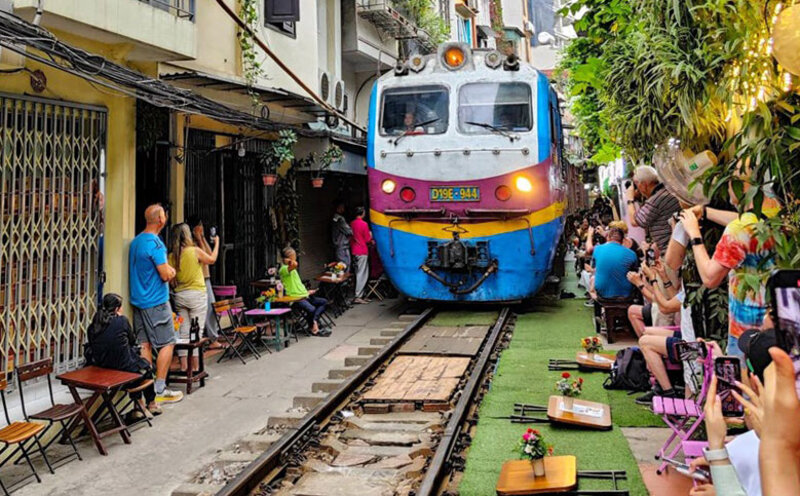
What makes this experience so extraordinary is the sheer closeness of it all. The alley is barely wide enough for two people to stand side by side, with café chairs, potted plants, and string lights filling the space right up to the edge of the track. When a train passes, tables and seats are quickly pulled back, locals shout warnings, and everyone scrambles — before resettling seconds later to continue their coffee.
Originally, this was simply where railway workers and their families lived. The homes were built before modern safety regulations, and the community adapted to life beside the tracks. As social media brought global attention to the scene, locals began opening small cafes and shops to welcome the steady stream of curious visitors.
Where to find Train Street in Hanoi’s old Quarter
Hanoi Train Street runs through a residential section of central Hanoi, close to the heart of the Old Quarter. There are several entry points that visitors commonly use:
- 224 Le Duan Street — one of the most well-known entry points, easy to find on Google Maps
- Kham Thien Street — runs parallel to the area and provides a convenient approach from the south
- Search terms like ‘Train Track Cafe’, ‘Cafe 28 Train Track’, or ‘Train Street Coffee’ will all bring up accurate pins on mapping apps
Once you arrive at the entrance, the alley opens up ahead of you. The track runs straight through the middle, with cafes on both sides. You’ll spot the overhead wires, the worn wooden sleepers underfoot, and the colourful lanterns strung between the buildings — an atmospheric setting that looks as good in person as it does in photos.
Tip: the quieter stretch of the track runs slightly further from the busiest tourist entrances. If you prefer a more relaxed experience, walk a little further along and look for a café with fewer crowds.
Hanoi Train Street Schedule
This is the question every visitor asks — and rightly so. Visiting without knowing the train times means you may wait for hours, or miss the experience entirely. The train does not run on a fixed tourist schedule; it follows Vietnam Railways’ operational timetable.
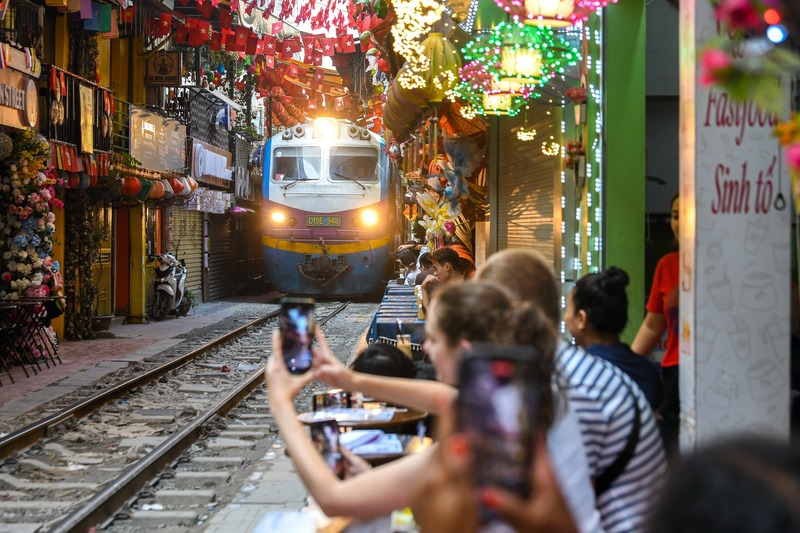
Based on current information, trains pass through Train Street approximately twice a day in each direction. The most commonly observed times are:
- Around 15:30 and 19:15 — trains heading one direction
- Around 07:15 and 21:45 — trains heading the other direction
However, these times are subject to change due to seasonal adjustments, delays, or route modifications. The best approach is to check with your café host when you arrive, as local vendors track the daily schedule closely and will be happy to let you know when the next train is due.
Evening visits (around 19:00–20:00) are especially popular, when the alley is lit with warm lights and the contrast between the glowing cafes and the approaching train makes for a truly cinematic moment.
Best Cafes on Hanoi Train Street: Where to Sit and Sip
The cafes along Train Street are small, independently run, and each has its own character. Most are set up on the immediate edge of the track — you’ll find yourself close enough to feel the vibration of the passing train through your seat. Here are the types of spots worth seeking out:
Track-Side Seating
Look for cafes where the chairs and tables are literally placed on or beside the railway sleepers. This is the classic Train Street experience. Café owners will move furniture quickly when a train approaches — this is routine, and entirely part of the charm.
Rooftop and Elevated Views
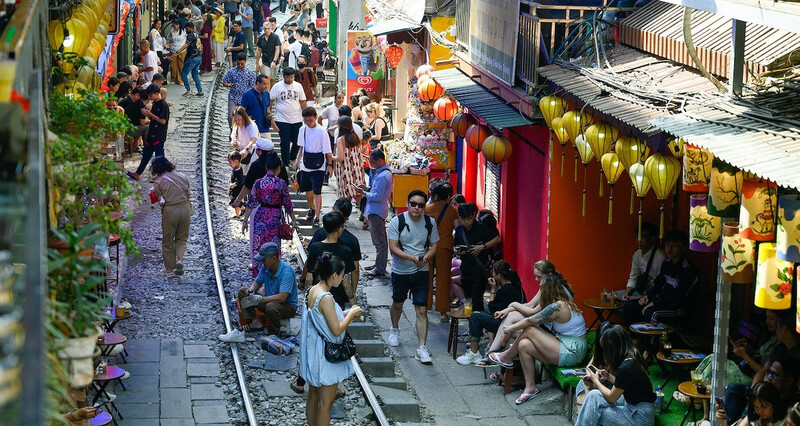
Some venues offer seating on upper floors or small balconies overlooking the track. These spots are ideal for photography enthusiasts who want a wider angle, and they tend to be slightly less noisy when the train passes.
Traditional Vietnamese Coffee
Most Train Street cafes serve ca phe trung (egg coffee), ca phe sua da (iced milk coffee), fresh coconut coffee, and a range of fruit smoothies. Prices are affordable by international standards — expect to pay between 30,000 and 60,000 VND per drink. Buying a drink is the standard courtesy for using a café’s seating; avoid settling into a seat without ordering.
Practical Tips for Visiting Hanoi Railway Cafe
A little preparation goes a long way to making your visit smooth and enjoyable. Keep the following in mind:
- Always buy a drink: this is how café owners earn their income, and it is considered basic courtesy on Train Street
- Listen to the locals: when shopkeepers or residents call out, it means the train is approaching — move back from the track immediately
- Visit at different times of day: the atmosphere in the morning is calm and local; evenings are more vibrant and photogenic
- Check the train schedule with your barista when you arrive: they know the day’s timetable better than any app
- Keep children close: the excitement of the moment can make it easy to forget how little space there is between the track and the café walls
- Arrive 20–30 minutes before an expected train: this gives you time to settle in, order your coffee, and enjoy the atmosphere before the main event
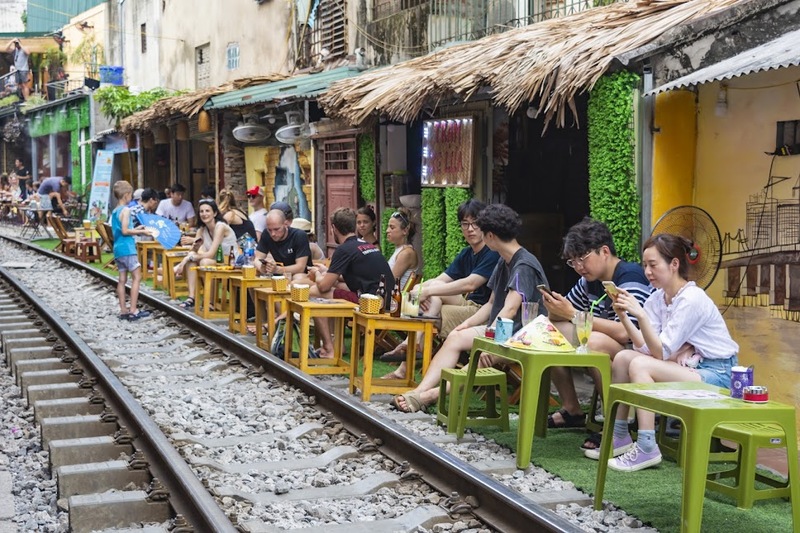
Safety is the responsibility of every visitor. The track is active and unguarded. Café owners and local residents manage crowd movement as best they can, but ultimately it is each visitor’s responsibility to stay aware and step back when directed.
Is It Safe? What You Should Know Before You Go
The short answer: yes, with awareness. Train Street has been operating as a tourist destination for several years, and local café owners are experienced at managing visitor safety during train passes. Furniture is moved, the crowd is guided back, and the whole process is well-practiced.
That said, visitors should treat the space with respect. This is a working railway line passing through a residential community — not a theme park. The homes directly beside the track belong to real families who have lived there for generations. Being a considerate guest means following instructions, keeping noise to a reasonable level, and not interfering with daily life beyond what is natural at a café visit.
Periodic changes in local regulations have occasionally affected access to certain sections of Train Street. Before your visit, it is worth checking with your tour operator or hotel for the latest update on which areas are open to visitors.