

A data plan that works well in Hanoi might struggle on the mountain roads of Ha Giang. If you’re visiting Vietnam for the first time, where you’re going matters as much as how much data you’ll need.
In this guide, My Vietnam Tours helps you choose a Vietnam eSIM for tourists that fits your itinerary and budget. You’ll learn how to compare providers, set up your eSIM before departure, and prepare for stretches of the trip where the signal may drop.
1. Quick answer: eSIM or physical SIM for Vietnam?
For most travelers with a recent phone, an eSIM is the better choice. For older or locked phones, or for people who want a local phone number, a physical SIM from a Vietnamese carrier is still a solid option. This is the core of the Vietnam SIM card vs eSIM question.
| Factor | eSIM | Physical tourist SIM |
|---|---|---|
| Where you buy it | Online, before you fly | Airport kiosk or phone shop in Vietnam |
| Setup | Scan a QR code, about 5 to 10 minutes | Staff usually install it for you |
| Phone compatibility | Needs an unlocked, eSIM-capable phone | Works with almost any unlocked phone |
| Keep your home number | Yes, on a second line for calls and texts | Only if you have a dual-SIM phone |
| Local phone number | Usually data only | Often included, useful for restaurant or driver calls |
| Registration | Handled by the provider | Passport needed for registration in store |
| Network choice | Provider picks the partner network | You choose Viettel, Vinaphone or Mobifone |
Our recommendation
Choose an eSIM if your phone supports it and you mainly need data for maps, Grab, messaging and photos. Choose a physical SIM if your phone is older, if you want a Vietnamese number, or if you plan to spend a long time in remote mountain areas and want to pick the carrier with the strongest rural signal.
2. Best eSIM for Vietnam: What to compare before you buy
Many brands sell a Vietnam eSIM for tourists, including global names such as Airalo, Holafly, Nomad and Saily, as well as regional providers. Rather than crown one winner that may change next season, use the checklist below to find the best eSIM for Vietnam for your trip.
| What to check | Why it matters |
|---|---|
| Partner network | Plans running on Viettel generally give the widest rural reach. Ask the seller which local network is used. |
| Data amount and validity | Match it to trip length. Maps, video calls and uploading photos use more than most people expect. |
| Hotspot (tethering) | Some plans block it. Check if you plan to share data with a partner or laptop. |
| Speed and 5G | Cities have fast 4G and 5G. Some plans throttle speed after a daily allowance. |
| Coverage region | A Vietnam-only plan will not work in Cambodia or Laos. |
| Top-up option | Running out of data in Sapa is far more annoying than paying a little extra for a larger plan. |
| Support and refund policy | Look for live chat support and clear terms if the QR code fails. |
How much data do you need?
A light user who relies on hotel Wi-Fi and uses data for maps and messages can manage on a small plan. If you stream, upload to social media, or work remotely, pick a larger or unlimited plan. When in doubt for a trip of a week or longer, size up. It is the cheapest insurance you can buy.
3. Viettel vs Vinaphone tourist SIM: local carriers explained
Vietnam has three main mobile networks, and they all sell tourist SIMs. If you are comparing a Viettel vs Vinaphone tourist SIM, here is how we explain it to guests.
- Viettel: the largest network, with the broadest rural and mountain coverage. It is the safest pick for Ha Giang, Cao Bang, Ba Be and other remote northern areas.
- Vinaphone: strong in cities and towns, with good speeds in Hanoi, Da Nang and Ho Chi Minh City. Rural coverage is decent but can be patchier in far northern valleys.
- Mobifone: a reliable third option, popular with travelers sticking to major tourist routes such as Hanoi, Hoi An and Saigon.
Vietnamobile also exists, but it is less common among visitors. All three major carriers have rolled out 5G in big cities, though you will mostly use 4G once you leave them.
3.1. Which has better coverage?
On the main tourist circuit, the difference is small. In remote mountain areas, Viettel usually wins. If your route includes a motorbike or road journey in the far north, such as our 7-day Northern Wonders tour through Ha Giang, Cao Bang and Ba Be Lake, a Viettel-based SIM or eSIM is the sensible choice.
3.2. Buying a physical SIM on arrival
Airport kiosks at Noi Bai in Hanoi and Tan Son Nhat in Ho Chi Minh City sell tourist SIMs. Bring your passport, because registration is required. Compare the package before paying, and ask the staff to confirm that data works before you leave the counter. Prices at airports are often higher than in city phone shops.

4. How to install and activate your Vietnam eSIM before you land
Setting up a Vietnam eSIM for tourists takes minutes, but do it at home on reliable Wi-Fi. Exact menus vary by phone, yet the steps are the same.
- Check compatibility. Your phone must be eSIM-capable and carrier unlocked. On iPhone, look under Settings, General, About for an IMEI listed as EID. On Android, check Settings, About phone.
- Buy your plan. Pick a provider and a plan with the right data and validity. Confirm that the start date works for your arrival.
- Install the eSIM. Open the email or app, then scan the QR code in Settings (Cellular or Mobile Network, then Add eSIM). Label it something like Vietnam.
- Keep it switched off at home. Many plans start counting validity on first connection, but some begin on a set date. Read the terms.
- Turn it on after landing. Enable the eSIM line, switch on data roaming for that line, and set it as your cellular data line. Keep your home SIM on for calls and texts if you want, but turn off its data roaming to avoid charges.
- Test it. Open a map and send a message before you leave the arrivals hall.
If the connection does not start
Restart the phone, confirm data roaming is on for the eSIM line, and try selecting the network manually. If it still fails, contact the provider through their chat support. Keep a screenshot of your QR code and order number, and download any offline maps before you fly as a backup.

5. Coverage reality check: Where Vietnam internet for travelers drops
Vietnam internet for travelers is generally good. Cities are well covered, mobile data is fast, and even many rural areas have a signal. But it is not perfect. Here is what to expect in popular destinations.
| Destination | What to expect |
|---|---|
| Hanoi, Ho Chi Minh City, Da Nang | Strong 4G and often 5G. Hotel and cafe Wi-Fi is common. |
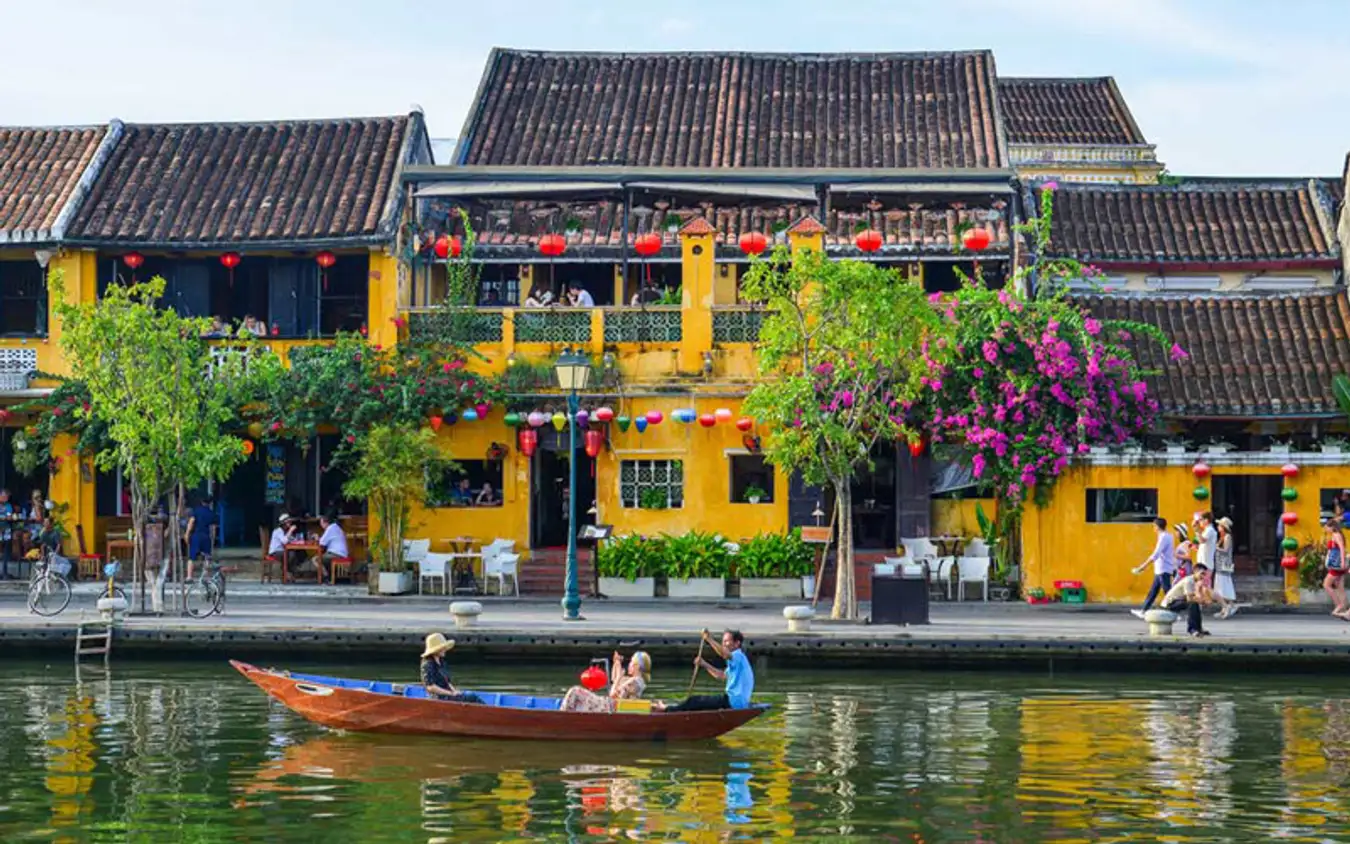
| Hoi An and Hue | Reliable in town. Rice fields and villages may be slower but usually usable. |
| Ha Long Bay | Signal is good near the port and on parts of the bay, but can fade among the outer islands. Cruise Wi-Fi is often limited, so treat it as a break from screens. |
| Sapa | Good in town. Signal can drop in valleys and on trekking routes. |
| Ha Giang and Cao Bang | The weakest region. Expect gaps on mountain passes and in deep valleys, even with Viettel. Download offline maps. |
| Phu Quoc | Usually good around the main resort and town areas, with some weaker spots in the quieter interior and southern beaches. |
| Mekong Delta | Generally fine on main roads and towns, but variable on small canals. |
Coverage can change with new tower construction and weather, so treat this as general guidance rather than a guarantee. For remote regions, offline maps and a downloaded translation language pack are more reliable than hoping for a signal.
Guided tours and data
If you travel on a private tour, your guide and driver handle navigation, so data is a convenience rather than a necessity. On the 10-day Classic Vietnam tour from north to south, most guests still use data for photos, messages home, and getting around on free evenings in Hanoi, Hoi An and Saigon.
6. One eSIM across Vietnam, Cambodia and Laos, plus apps to download
Many travelers combine Vietnam with Angkor Wat or Laos. A Vietnam-only eSIM will not work across the border, so you have two sensible options.
- Regional eSIM: a plan that covers Southeast Asia or Asia, including Vietnam, Cambodia and Laos. One QR code, one setup, but usually a bit less data per dollar and sometimes slower speeds.
- Separate country plans: install two or three eSIMs in advance (modern iPhones and many Androids can store several) and switch lines at each border.
Check each country in the plan description before you buy, as coverage lists differ between providers. If your route resembles our 12-day Cambodia and Vietnam journey, which starts in Phnom Penh and Siem Reap before moving to Vietnam, a regional plan is often the simplest choice.
6.1. Phone tips for US, Canadian, Australian and Singapore travelers
- Make sure your phone is carrier unlocked before you leave. Financed phones are often locked.
- Recent iPhones (from the XS and XR generation onward) and recent Google Pixel and Samsung Galaxy models support eSIM. Check your exact model, as some regional versions differ.
- Travelers from Singapore, Malaysia and the Philippines may find roaming add-ons from home carriers convenient, but they are often pricier than a local eSIM for longer stays.
- Bring a small power bank. Maps and Grab drain batteries fast.
- Use a VPN only if you need it for work. Keep it simple for everyday use.
6.2. Apps to download with your data
- Grab: the main ride-hailing and food delivery app. Add a payment card before you arrive and save your hotel address.
- Google Maps: download offline areas for each city and remote region on your route.
- Google Translate: download the Vietnamese language pack and use camera translation for menus.
- WhatsApp, Zalo or Messenger: for contacting guides, hotels and drivers. Zalo is widely used by locals.
- Your airline and booking apps: for domestic flights between Hanoi, Da Nang and Saigon.
Install and sign in to all of these on home Wi-Fi so verification codes do not depend on a new line.
7. Frequently Asked Questions about Vietnam eSIM for tourists
7.1. What is the best eSIM for Vietnam for tourists?
The best eSIM for Vietnam depends on your route and data use. Look for a plan that runs on Viettel if you are heading to mountain regions, offers enough data for your trip length, allows hotspot sharing, and has live support. Well-known providers include Airalo, Holafly, Nomad and Saily, but always compare current plans before buying.
7.2. Is an eSIM or a physical SIM better in Vietnam?
An eSIM is better for most travelers because you can set it up before you fly and keep your home SIM active. A physical SIM is better if your phone does not support eSIM, if you want a local Vietnamese number, or if you want to choose a specific carrier such as Viettel in person.
7.3. Does Viettel or Vinaphone have better coverage in Vietnam?
Viettel generally has the broader coverage, especially in rural and mountain areas such as Ha Giang and Cao Bang. Vinaphone performs well in cities and on main tourist routes. If you stay mainly in Hanoi, Hoi An and Ho Chi Minh City, either network will serve you well.
7.4. Can I use one eSIM for Vietnam and Cambodia?
Yes, but only with a regional eSIM that lists both Vietnam and Cambodia, and often Laos, as covered countries. A Vietnam-only eSIM will not connect across the border. Check the country list before purchase, or install a separate eSIM for each country and switch lines when you cross.
7.5. Do I need a SIM card for a guided tour in Vietnam?
You do not strictly need one, because your guide and driver handle directions, tickets and local calls. Still, data is useful for messages, photos, Grab on free evenings and translation. At My Vietnam Tours, many guests set up an eSIM before arriving so they are connected from the airport.
7.6. How do I install a Vietnam eSIM before I travel?
Confirm your phone is unlocked and eSIM-compatible, buy a plan, then scan the QR code in your phone’s cellular settings while on Wi-Fi. Label the line Vietnam and leave it off until you land. After arrival, turn on the eSIM, enable data roaming for that line and test your connection.
7.7. Will my eSIM work in Ha Long Bay and Sapa?
Usually yes near ports and towns, but signal can weaken among Ha Long Bay’s outer islands and on Sapa’s valley treks. Cruise Wi-Fi may also be limited. Download offline maps and messages before you go, and plan to treat these places as low-connectivity time.
7.8. Can I keep my home number while using a Vietnam eSIM?
Yes, if your phone supports dual SIM. Keep your home SIM on for calls and texts, set the eSIM as the data line, and turn off data roaming on your home SIM to avoid roaming charges. Most tourist eSIMs offer data only, so use WhatsApp or similar apps for calls.
Choosing a Vietnam eSIM for tourists comes down to three checks: an unlocked eSIM-capable phone, a plan that matches your route and data needs, and offline maps for the remote north. Set it up at home, and you will land in Vietnam connected and ready to go. When you are ready to plan the trip itself, explore our Classic Vietnam tour or contact My Vietnam Tours for a private itinerary built around your dates.