

Son Doong Cave Trek: Full Guide to Vietnam’s Giant Cave
Imagine a rainforest growing in complete darkness hundreds of meters underground, clouds forming inside a cave, and a river carving its way through ancient limestone that has never seen daylight. Welcome to Son Doong cave — the largest natural cave on Earth and the destination at the heart of the most extraordinary Son Doong cave trek on the planet, hidden deep within Vietnam’s Phong Nha-Ke Bang National Park in Quang Binh Province.
A Son Doong cave trek is not a hiking trip with a scenic viewpoint at the end. It is a 6-day expedition through one of the most remote and extraordinary environments on the planet. You will scramble over colossal boulders, harness up to scale a 90-meter rock wall, wade through underground rivers, and sleep beneath dolines where sunlight pours through collapsed ceilings into the jungle below.
Only 1,000 visitors are permitted each year — and spots sell out up to 12 months in advance. At My Vietnam Tours, we have compiled everything you need to know before booking your Son Doong cave trek: the real itinerary, honest fitness requirements, seasonal conditions, full cost breakdown, and the practical details that make the difference between a once-in-a-lifetime adventure and an underprepared ordeal.
What makes Son Doong Cave unlike any place on Earth?
Son Doong — pronounced Shern Doong — translates to “mountain river cave” in Vietnamese. Before planning any Son Doong cave trek, it helps to understand what you are actually entering: a cave formed over two to five million years as underground rivers eroded the limestone bedrock along a tectonic fault line in the Annamite Mountains, discovered by local hunter Ho Khanh in 1991 and fully explored by a British caving team in 2009.
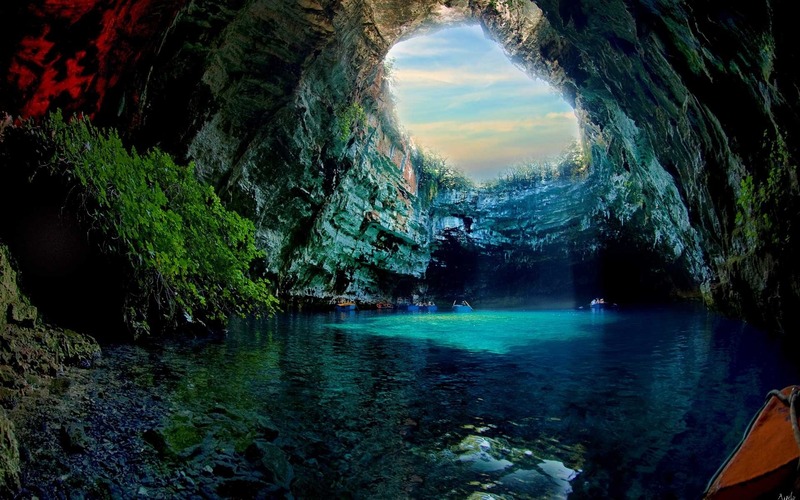
The cave’s chambers reach up to 200 meters high and 150 meters wide — large enough to fit an entire New York City block, skyscrapers included. Around 300,000 years ago, sections of the cave ceiling collapsed, creating massive skylights called dolines. These openings let in sunlight and rainfall, giving rise to lush jungle ecosystems thriving hundreds of meters below the surface.
What truly sets Son Doong apart is its own weather system. The dramatic temperature differential between the interior and exterior air creates mist, clouds, and even rain inside the cave. Guided treks began in 2013, and the Son Doong cave trek remains one of the few expedition-style adventures anywhere in the world where portions of the route are still being discovered.
Son Doong cave trek itinerary: All 6 days in full
The Son Doong cave trek runs for 6 days and 5 nights, covering 25 km of terrain ranging from dense jungle trails to underground boulder fields, river crossings, and vertical rope climbs. Below is a complete breakdown of each day so you know exactly what to prepare for.
Day 1 (Evening Before) – Safety Briefing in Phong Nha
The Son Doong cave trek officially begins the evening before Day 1 with a mandatory safety and equipment briefing at the Oxalis Adventure office in Phong Nha town. The team introduces the guides, fits each trekker with helmets and harnesses, reviews cave protocols, and serves a group dinner. You will stay the night at Commander Lodge, a short distance from town, so you are rested and ready for an early start.
Day 2 – Phong Nha to Hang En Cave (11 km)
Departure is early morning by vehicle into Phong Nha-Ke Bang National Park, followed by a full day of trekking through primary jungle. The trail crosses rivers multiple times and climbs through dense forest before descending into Hang En — the world’s third-largest cave. The first campsite sits inside Hang En’s vast entrance chamber, where tens of thousands of swallows nest. The cave’s sheer scale makes for an extraordinary introduction to what lies ahead. Distance: approximately 11 km. Elevation gain: around 300 m.
Day 3 – Hang En to Son Doong Cave: First Entry (5 km)
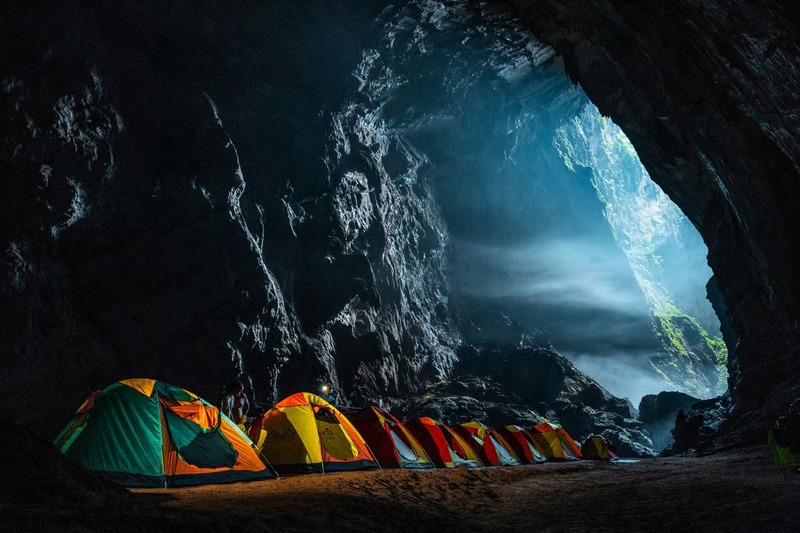
This is the day most trekkers have been waiting for. After breakfast inside Hang En, the group continues through jungle and a narrow passage before descending steeply into Son Doong through its main entrance — the moment the Son Doong cave trek truly begins. The descent is slippery and requires careful footing. Once inside, the scale of the cave becomes immediately overwhelming — the ceiling disappears into darkness above and the walls stretch beyond the reach of headlamps. The first campsite is located near the first doline, where a jungle ecosystem grows in the sunlight below the collapsed ceiling. Distance: approximately 5 km. Elevation change: around 200 m descent.
Day 4 – Deeper Into Son Doong: The Great Wall of Vietnam (5 km)
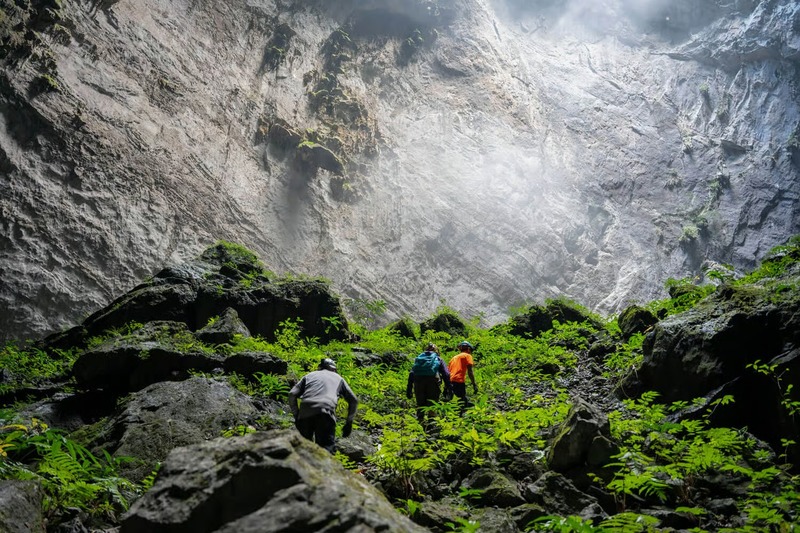
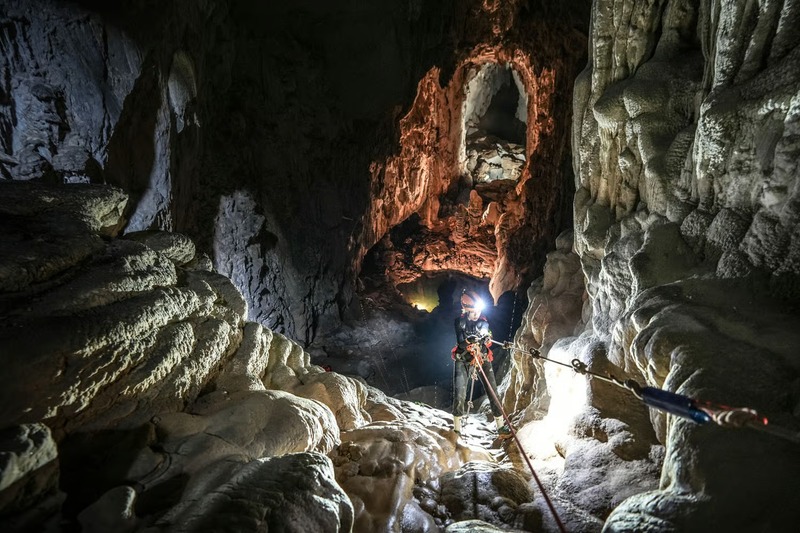
Day 3 is the most physically demanding of the entire Son Doong cave trek. The group moves deeper into Son Doong, passing the second doline — the largest opening in the cave, where clouds visibly form and drift — before reaching the Great Wall of Vietnam. This 90-meter calcite formation is the defining challenge of the trek. Trekkers ascend in three stages: an 18-meter ladder, followed by two roped pitches, fully harnessed throughout. Guides are positioned at each transition point. At the top, the cave opens into a cathedral-like chamber before the trail leads to the third and final campsite of the cave section. Distance: approximately 5 km. Elevation gain: 300 m including the Wall.
Day 5 – Exiting Son Doong: The Long Way Out (4 km inside + jungle)
The exit route on a Son Doong cave trek does not retrace the entry path. Instead, the group climbs out through a different section — steep, rocky, with sharp limestone underfoot. After emerging back into daylight, the trail continues through jungle back toward the national park boundary. By this point in the expedition, legs are tired and the terrain demands sustained focus. The group camps for a final night outside the cave system, under the forest canopy. Distance: approximately 4 km cave exit plus 3–4 km jungle trail.
Day 6 – Return Trek to Phong Nha and Group Dinner (11 km)
The final full trekking day of the Son Doong cave trek brings the group back through the jungle to the vehicles waiting at the park boundary. The mood on this day is typically a mix of exhaustion, elation, and the quiet realization of what has just been accomplished. The group returns to Phong Nha and checks into Chay Lap Farmstay — a beautiful riverside eco-lodge — where a group dinner celebrates the end of the expedition. Stories are shared, photographs compared, and the experience begins to settle. Breakfast the following morning is included before departure.
>> See more: Hang Son Doong Tickets: Prices, Booking Steps And Essential Travel Notes
Son Doong trek at a Glance: Key statistics
|
Total Distance |
25 km (15.5 miles) over 4 trekking days |
|
Elevation Gain |
800 m (2,625 ft) — approx. 200 m per day |
|
Total Duration |
6 days / 5 nights (3 nights camping inside the cave) |
|
Difficulty Level |
Extremely strenuous — Level 6/6 (Oxalis scale) |
|
Trekking Season |
January to August only |
|
Temperature Inside |
22°C – 25°C (72°F – 77°F) year-round |
|
Visitor Limit |
1,000 visitors/year — groups of 10 only |
|
Sole Operator |
Oxalis Adventure (exclusive permit holder) |
Source: Oxalis Adventure — sole licensed operator for Son Doong Cave
Best time to do a Son Doong cave trek: Season by Season
The Son Doong cave trek is open to visitors from January through August each year. Monsoon flooding from September to December makes all passages unsafe, and tours are completely suspended during this period. Each open season offers a distinct experience:
- January to March (Spring): Cooler temperatures of 15–22°C outside the cave. Seasonal lakes form inside Son Doong, creating mirror-like reflections of the stalactites above. Waterfalls run strongly early in the season. Ideal for those who prefer moderate weather.
- April to May (Late Spring): The landscape outside the cave is at its most intensely green. Wildflowers bloom along the jungle trail. Inside the cave, the temperature differential generates mist and clouds — the most photogenic conditions of the year. Sunbeams through the dolines create extraordinary light at this time.
- June to August (Summer): External temperatures reach 30–36°C, but the cave interior remains constant at 22–25°C. Swimming in the underground rivers and lake feels exceptionally refreshing in the heat. Booking lead times are slightly shorter compared to peak spring months.
Practical advice: Regardless of season, book your spot at least 10 to 12 months in advance. With only 1,000 annual permits and groups capped at 10, availability disappears fast — especially for January through May departures. Many travelers plan their entire Vietnam trip around when they can secure a Son Doong cave trek slot.
How difficult is the Son Doong cave trek? Honest fitness requirements
This is the most important question to answer honestly before you apply for a Son Doong cave trek. Oxalis Adventure rates the expedition at their maximum difficulty level — Grade 6 out of 6. If you are unable to continue past the first campsite, you will be escorted out the following day with no refund. This policy exists not to be harsh, but because evacuation from deeper inside the cave is genuinely complex.
Minimum fitness benchmarks set by Oxalis Adventure
- Walk or run 4–5 km, three to four times per week, for at least three months before departure
- Climb five flights of stairs continuously without stopping to catch your breath or feeling dizzy
- Complete at least one overnight camping and hiking trip within the 12 months before your tour
- Weigh under 100 kg (220 lbs) and be between 18 and 70 years of age
What the terrain actually demands
- Slippery mud and uneven rock: virtually every step inside the cave requires deliberate foot placement — there are no easy stretches
- Scrambling: a large proportion of movement inside Son Doong involves using all four limbs to climb over and through enormous boulders
- The Great Wall of Vietnam: the only section that may concern those with a fear of heights — a 90-meter ascent using ladders and roped pitches, with guides assisting throughout
- River crossings: depth varies by season, ranging from calf-deep to hip-deep; a guide rope assists in stronger currents
A note on claustrophobia: Son Doong is not a tight, narrow cave. The passages are vast — wide enough in places to fit a commercial aircraft — and each campsite sits near an entrance or doline where daylight is always visible. Claustrophobia is simply not a factor on the Son Doong cave trek.
Son Doong cave trek cost: Full price breakdown and what is included
The current price for the Son Doong cave trek is USD 3,000 per person (approximately 75,000,000 VND). This is a fixed rate with no negotiation. Given the full scope of what is provided, it represents strong value within the global adventure travel market at this level of technical complexity and remoteness.
What is fully included in the tour price
- Full support team: lead guide, safety expert, 6 safety assistants, 1 chef, and 15+ porters
- Safety equipment: caving helmets, headlamps with spare batteries, full climbing harness and rope systems
- Camping gear: individually labelled tent, sleeping bag, sleeping pad, pillow, and dry bag for each guest
- All meals: dinner at the pre-departure briefing, three full meals per day during the trek, group dinner post-expedition; filtered water throughout; dietary restrictions accommodated with advance notice
- Accommodation: one night pre-trek at Commander Lodge; one night post-trek at Chay Lap Farmstay; luggage stored and transferred between properties during the expedition
- Basic travel insurance: coverage up to 50,000,000 VND per incident occurring on the tour
- Conservation contribution: a significant portion of each tour fee directly funds protection of Phong Nha-Ke Bang National Park, a UNESCO World Heritage Site
Not included in the Son Doong cave trek price: flights to Dong Hoi Airport (VDH) or sleeper train/bus from Hanoi or Hue, personal travel insurance beyond the basic coverage (strongly recommended), alcoholic beverages, and personal purchases.