

Halal Food in Vietnam: Is Vietnam Muslim-Friendly? A First-Timer’s Guide
Vietnam is a mostly Buddhist and non-religious country where pork is everywhere, so many Muslim travelers wonder whether the trip will be stressful. The short answer is that it is very manageable with a little planning. This guide to halal food in Vietnam explains where to find halal restaurants, which dishes are naturally easier to eat, where the mosques and prayer spaces are, and how to build a route that keeps every meal comfortable.
We wrote it for first-time visitors from Malaysia, Singapore, Australia, the US and Canada who want a clear, honest picture. Vietnam is not a Muslim-majority destination, and halal options are concentrated in a few cities. But the communities that do exist are welcoming, the food scene is rich in beef, chicken, seafood and vegetables, and a good local guide can fill the gaps. Below you will find a quick answer, city-by-city notes, a list of dishes to enjoy or avoid, and a sample halal-friendly route.
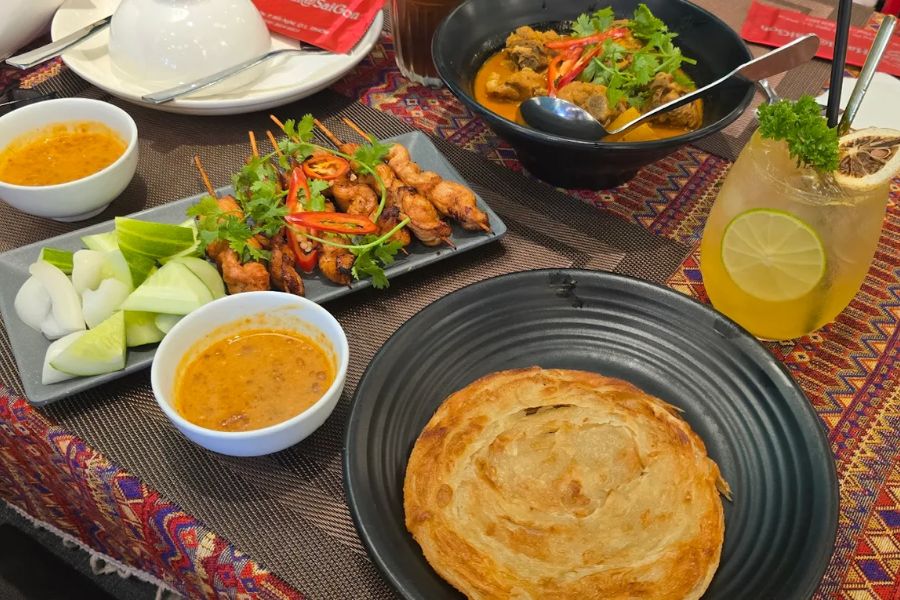
Is Vietnam Muslim-Friendly? A Quick Answer for Travelers
Yes, Vietnam is Muslim-friendly in the sense that it is safe, hospitable and easy to travel, but it is not a halal-by-default country. Islam is a small minority religion here. You will not hear the call to prayer on every street, and most restaurants do not display halal certification. What you will find is a handful of dedicated halal restaurants in the big cities, a few historic mosques, and a food culture where beef, chicken, seafood, tofu and vegetables are all common.
Here is how it breaks down in practice:
- Easiest: Ho Chi Minh City, where the Muslim community and the halal restaurant scene are the most visible.
- Good: Hanoi, with a mosque in the Old Quarter and a few halal-friendly eateries nearby.
- Manageable with planning: Da Nang, Hoi An and Hue, where you will rely more on seafood, vegetarian restaurants and pre-arranged meals.
- Needs more care: rural areas, boat cruises and homestays, where you should tell your operator your needs well ahead of time.
Many Malaysian and Singaporean travelers also feel at home because Vietnamese cooks use fresh herbs, lemongrass, chili and coconut flavors that feel familiar. The main risks are hidden pork, lard and shared cooking surfaces, which we cover below.
Halal Food in Ho Chi Minh City (Saigon)
Ho Chi Minh City is the best starting point if this is your first trip. The city has a long-established Muslim community, including Cham and Malay residents, and a cluster of halal restaurants serving Indian, Malay, Middle Eastern and Vietnamese-style dishes. Several are near central District 1, close to the Saigon Central Mosque area, so you can combine a meal with a prayer stop.
Expect to find halal curries, biryani, grilled meats, and some halal versions of Vietnamese noodle soups. Opening hours and certification change, so always check a restaurant’s current status before you go. For restaurant names, neighborhoods and a full list of mosques, read our dedicated Ho Chi Minh City halal guide, which is the detailed companion to this nationwide overview.
If your trip starts or ends in the south, Saigon is also the place to stock up on halal snacks and ask your guide about meals for the Mekong Delta day trips, where choices are simpler and advance planning matters.

Halal Food in Hanoi: Old Quarter and Mosque Area
Searching for halal food Hanoi usually leads to the Old Quarter, and for good reason. The city’s best-known mosque sits on a small street in the Old Quarter, and a few restaurants serving halal-friendly food operate in the surrounding blocks and in the Tay Ho and Ba Dinh areas. You will find Indian and Middle Eastern kitchens as well as small places that cook beef and chicken without pork.
A few practical tips for Hanoi:
- Plan lunch or dinner near the mosque so you can pray before or after eating.
- Ask whether the restaurant is certified or simply pork-free. Those are two different things, and you should decide which standard you follow.
- Pho bo (beef noodle soup) is the classic Hanoi dish, but confirm the broth is made without pork bones or lard, as some stalls mix them.
- Street food is atmospheric but hard to verify. Use it only if you are comfortable with a pork-free standard and the stall can show you what goes in.
Hanoi is also the usual gateway for Halong Bay, so tell your operator early if you need halal-friendly cruise meals. Cruise kitchens are small, and changes need notice.
Halal Food in Da Nang, Hoi An and Hue: What to Expect
Central Vietnam is where the halal picture gets thinner. Halal food Da Nang options are limited compared with Saigon or Hanoi, and Hoi An and Hue have very few dedicated halal restaurants. The good news is that central cuisine leans heavily on seafood, vegetables, rice noodles and herbs, so you can eat well without pork if you plan.
Da Nang
Da Nang is a modern beach city with international hotels, and some can prepare halal-friendly or seafood-based meals on request. Fresh grilled seafood along the coast is a safe and popular choice, provided it is cooked on a clean grill and not brushed with pork fat or sauces you cannot identify.
Hoi An
Hoi An has many vegetarian restaurants and cooking schools. Vegetarian kitchens are often the simplest route to a comfortable meal. A cooking class also lets you see every ingredient being prepared. Our Da Nang, Hoi An and Ba Na Hills food tour (4 days, 3 nights, from $434 per person) includes a Hoi An cooking class with dishes such as rice paper rolls with shrimp, Hoi An pancakes, seafood salad and lemongrass beef. Tell us your dietary needs in advance and we can discuss adapting the menu.
Hue
Hue’s imperial cuisine uses a lot of pork and shrimp paste, so it needs the most care. Vegetarian temple-style meals are a reliable fallback here.
Naturally Halal-Friendly Vietnamese Dishes and What to Avoid
Knowing the kitchen basics makes eating halal in Vietnam much easier. Many dishes are built on separate components, so you can see what goes into a bowl. Others hide pork in the broth or sauce.
| Dish | Usually halal-friendly? | What to check |
|---|---|---|
| Pho bo (beef noodle soup) | Often yes | Broth made without pork bones; no lard |
| Banh mi | Only if customized | Standard fillings include pork and pate; ask for egg, chicken or vegetables, and no pate or mayonnaise containing lard |
| Fresh spring rolls (goi cuon) | Often with shrimp | Skip the pork slices; check the dipping sauce |
| Mi Quang | With chicken or shrimp | Confirm no pork in the broth or toppings |
| Grilled seafood | Usually yes | Cooking surface and basting sauce |
| Com (rice) with grilled chicken or beef | Often yes | Shared grills and marinades |
| Vegetable and tofu dishes | Usually yes | Fish sauce, oyster sauce and alcohol in cooking |
Ingredients to watch
- Pork and pork stock: common in noodle soups, fried rice and dumplings.
- Lard: sometimes used for frying and in pastries.
- Fish sauce and shrimp paste: seafood-based and generally accepted by many Muslims, but confirm your own school’s view.
- Rice wine and cooking wine: used in some marinades and sauces.
Can Muslims eat pho and banh mi? Yes, with checks. Pho bo can be fine when the broth is beef only, and banh mi can be made pork-free if you request it clearly. Learning a few Vietnamese phrases helps a lot, and we list some below.

Mosques, Prayer Rooms and Prayer Time on the Road
Vietnam has a small number of mosques, concentrated in Ho Chi Minh City, Hanoi and parts of the south, such as the Mekong region. Outside these areas, mosques are rare, so prayer is usually done in your hotel room or another quiet space.
- Ho Chi Minh City: several mosques serve the local and visiting community, including near central District 1.
- Hanoi: a mosque in the Old Quarter is the main place for congregational prayer.
- Airports: facilities vary by terminal and change over time, so ask your guide or check with the airport before you fly rather than assuming a prayer room is available.
- Da Nang, Hoi An and Hue: plan to pray at your hotel. Bring a travel prayer mat and a compass or qibla app.
On a private tour your guide can build prayer breaks into the schedule, for example before a long drive or between a morning sightseeing block and lunch. This is much easier than on a fixed group departure.
How to Travel Halal on a Private Tour and a Sample Route
Private touring is the most reliable way to follow a halal diet in Vietnam. Instead of searching for a restaurant when everyone is hungry, your guide and operator plan meals in advance, call ahead to restaurants and adjust the pace around prayer times. At My Vietnam Tours, part of Lua Viet Tours and operating since 1995, we ask about dietary needs at the booking stage and brief the guide and drivers before you arrive. Please tell us whether you want halal-certified restaurants only or are comfortable with pork-free, seafood and vegetarian options.
Handy phrases and apps
- Toi khong an thit heo: I do not eat pork.
- Khong mo heo, khong nuoc dung heo: no lard, no pork broth.
- Toi an chay: I eat vegetarian.
- Use a halal restaurant finder app and a map app to check recent reviews, and a translation app to show written notes to cooks.
A halal-friendly route to consider
Our Classic Vietnam tour from north to south runs 10 days and 9 nights, from $1,695 per person, and covers Hanoi, Halong Bay, Hoi An and the Mekong Delta. It can be a base for a Muslim friendly Vietnam itinerary, with halal meals requested for each stop.
| Stage | Halal focus |
|---|---|
| Hanoi | Dinner near the Old Quarter mosque; confirm pho broth |
| Halong Bay | Ask the cruise in advance for pork-free, seafood-based meals |
| Hoi An and Da Nang | Seafood, vegetarian restaurants, pre-arranged lunches |
| Saigon and the Mekong | Halal restaurants in the city; simple pre-arranged meals on the delta |
The tour page lists an optional dinner package at 56 USD per person in several cities, which is a good moment to ask about halal-friendly restaurants. Please confirm menus with us when booking, because we cannot promise certified halal meals at every stop unless they are arranged and confirmed.
If you are reading as a Malaysian traveler, treat this as a practical halal Vietnam travel guide Malaysia families can follow: start in Saigon for comfort, visit Hanoi for culture, and use the central coast for seafood and rest.
Frequently Asked Questions about halal food in Vietnam
Is Vietnam Muslim-friendly?
Yes, Vietnam is safe and welcoming for Muslim travelers, but it is not a halal-by-default country. Islam is a small minority religion, so halal restaurants and mosques are concentrated in Ho Chi Minh City and Hanoi. With some planning around meals and prayer, most Muslim visitors travel comfortably.
Is halal food easy to find in Vietnam?
It is easy in Ho Chi Minh City, reasonable in Hanoi, and limited in Da Nang, Hoi An and Hue. Outside big cities, you will rely on seafood, vegetarian restaurants and meals arranged ahead. Always check current halal status, because restaurants open, close and change suppliers.
Which city in Vietnam is best for Muslim travelers?
Ho Chi Minh City is usually the best choice, thanks to its larger Muslim community, several mosques and a wider range of halal restaurants. Hanoi is the second best option. Central cities like Da Nang and Hoi An are enjoyable but need more advance planning for meals.
Can Muslims eat pho and banh mi in Vietnam?
Often yes, with checks. Pho bo can be fine if the broth is made from beef only, without pork bones or lard. Banh mi usually contains pork and pate, so ask for egg, chicken or vegetables and request no pate. Strict halal travelers should prefer certified restaurants.
Can a tour operator arrange halal meals in Vietnam?
Yes. On a private tour, an operator can book halal or pork-free restaurants, brief guides and call kitchens ahead. My Vietnam Tours asks about dietary needs when you book. Please state whether you need certified halal or pork-free meals, so we can plan realistically.
Where can Muslims pray in Vietnam?
The main mosques are in Ho Chi Minh City and Hanoi, with others in parts of southern Vietnam. In Da Nang, Hoi An and Hue, most travelers pray in their hotel room. Bring a travel prayer mat and a qibla app, and ask your guide to schedule prayer breaks.
Is fish sauce halal?
Fish sauce is made from fermented fish and salt, so many Muslims consider it permissible, though opinions differ between schools of thought. It is used in many Vietnamese dishes and dips. If you avoid it, say so clearly and ask for soy sauce or salt instead.
When is the best time to visit Vietnam as a Muslim traveler?
Vietnam can be visited year-round, so choose by weather and region rather than halal availability. If you want to time a trip around Ramadan or Eid, tell your operator early, since restaurants may adjust hours and you may want a lighter sightseeing schedule.
Finding halal food in Vietnam takes more planning than in Malaysia or Singapore, but it is very doable when you know the cities, the dishes and the questions to ask. Tell us your dietary standard, and we will help you shape a route that works. Explore our Classic Vietnam tour and contact My Vietnam Tours to start planning your halal-friendly trip.
