

What You Need To Know About Terminal 3 Of Tan Son Nhat Airport?
If you are planning to fly around Vietnam in 2026, there is a very good chance you will pass through Terminal 3 (T3). It’s the new domestic terminal at Tan Son Nhat International Airport in Ho Chi Minh City.
Modern, big and designed specifically to make domestic travel smoother, Terminal 3 will handle the overload at the old terminal. But because it is new, many travellers are still confused about where it is, which airlines use it, and how to get there.
Here is a friendly, practical guide to help you feel prepared before your next domestic flight from Saigon.
What is Tan Son Nhat T3?
T3 (Terminal 3) is Vietnam’s largest domestic passenger terminal, built inside the Tan Son Nhat airport complex in Ho Chi Minh City. It officially opened in April 2025 and is designed to handle about 20 million passengers a year, or up to 7,000 passengers per hour at peak time.
The project cost nearly 11 trillion VND, funded by Airports Corporation of Vietnam (ACV), and includes:
- A multi level passenger terminal
- A multi story car park with shops and services
- A new elevated road system in front of the terminal
- Additional aircraft parking stands
The big idea is simple: T3 takes over most of the domestic traffic, while T1 gradually becomes less crowded and T2 continues to handle international flights. Together, T1, T2 and T3 lift Tan Son Nhat’s total capacity to around 50 million passengers per year.
So if you are an international traveller already in Vietnam and flying to places like Da Nang, Hanoi, Hue, Nha Trang or Phu Quoc, you will probably use T3, depending on your airline.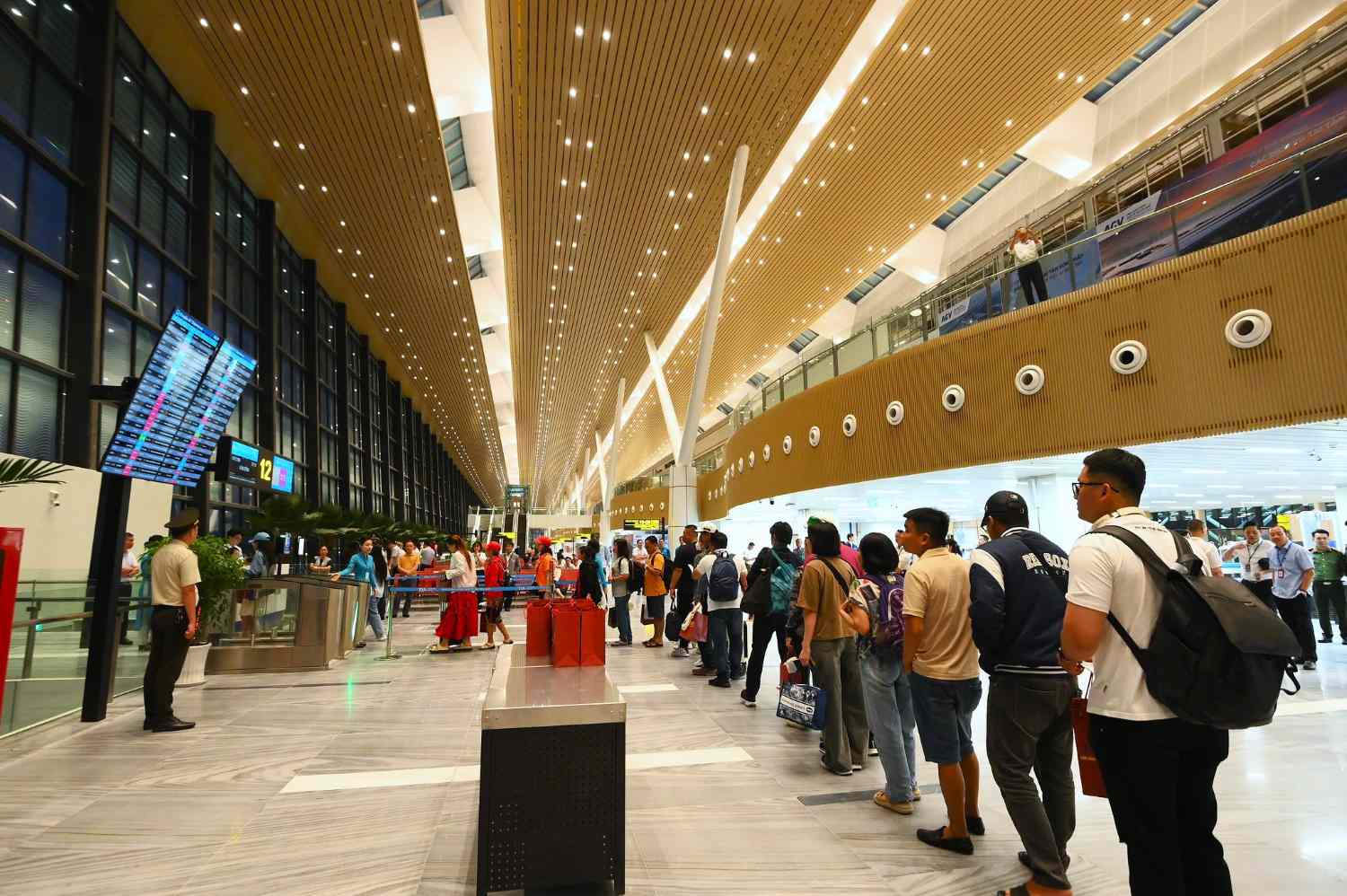
Where is Tan Son Nhat Airport Terminal 3?
T3 is inside the same airport area as the existing terminals, but it sits on a slightly different side of the complex, facing the new Tran Quoc Hoan – Cong Hoa connector road and a newly built overpass.
In simple traveller language:
- International arrivals and departures still use Terminal 2 (T2)
- Some older domestic flights use Terminal 1 (T1)
- Most new domestic flights are now handled by Terminal 3 (T3)
If you arrive internationally at T2 and then connect to a domestic flight from T3, you will not walk there. You will move between terminals by shuttle bus, taxi or ride hailing (more on that below). From the city centre, taxis and ride hailing apps now often ask you to choose your terminal, so you will want to select T3 – domestic.
Thanks to the new connector road and overpass, cars can reach T3 more directly, helping to reduce the famous traffic jams around the airport.
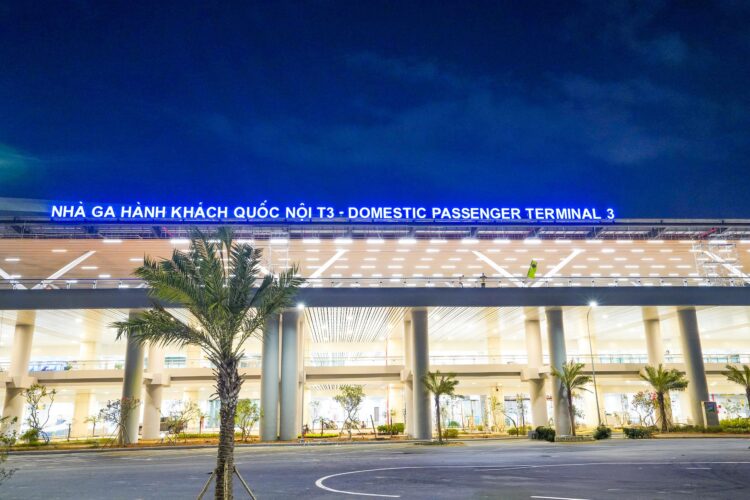
Tan Son Nhat Terminal 3
Why was Tan Son Nhat Airport Terminal 3 built?
For years, Tan Son Nhat was operating beyond its designed capacity, especially at the domestic terminal. At peak times, the airport was handling more than 100,000 passengers per day, with heavy congestion in front of T1 and on surrounding streets.
To fix that, the Vietnamese government approved the T3 project in 2020 with three main goals:
- Increase overall capacity
With T3 in operation, Tan Son Nhat can handle up to 50 million passengers per year, easing pressure while the new Long Thanh International Airport near Ho Chi Minh City is still under construction.
- Improve the domestic travel experience
A new, spacious terminal with more check in counters, security lanes and boarding gates helps reduce queues and delays, especially on busy routes like Ho Chi Minh City – Hanoi.
- Upgrade infrastructure around the airport
T3 is part of a bigger plan that includes the new overpass, connector road and expanded bus network to reduce congestion and improve access for both private vehicles and public transport.
In short, T3 is not just a shiny new building. It is the main tool to make flying within Vietnam from Ho Chi Minh City smoother and more predictable.
Who does Tan Son Nhat Airport Terminal 3 serve?
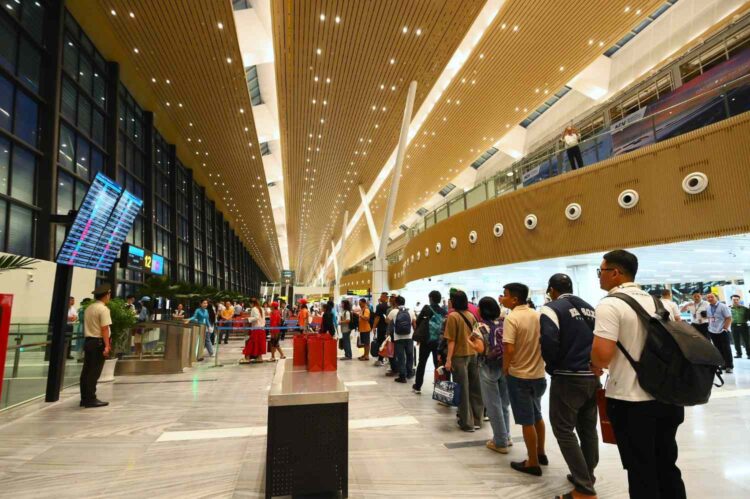
T3 is a domestic terminal only. That means:
- All flights from T3 are domestic flights within Vietnam
- You will not go through immigration at T3
- You will still use T2 for international flights in and out of Vietnam
The terminal is designed to handle around 80 percent of Tan Son Nhat’s domestic flights once the transfer of airlines is complete.
So who is T3 for?
- Vietnamese travellers flying between cities
- Overseas Vietnamese coming home and then connecting domestically
- International tourists like you, flying onward to places such as Phu Quoc, Da Nang, Nha Trang, Dalat, Hue, Quy Nhon and more
If you land in Ho Chi Minh City from abroad and your next boarding pass shows Terminal 3 or T3, you know you are flying domestically from this new terminal.
Which airlines will run at Tan Son Nhat Airport Terminal 3?
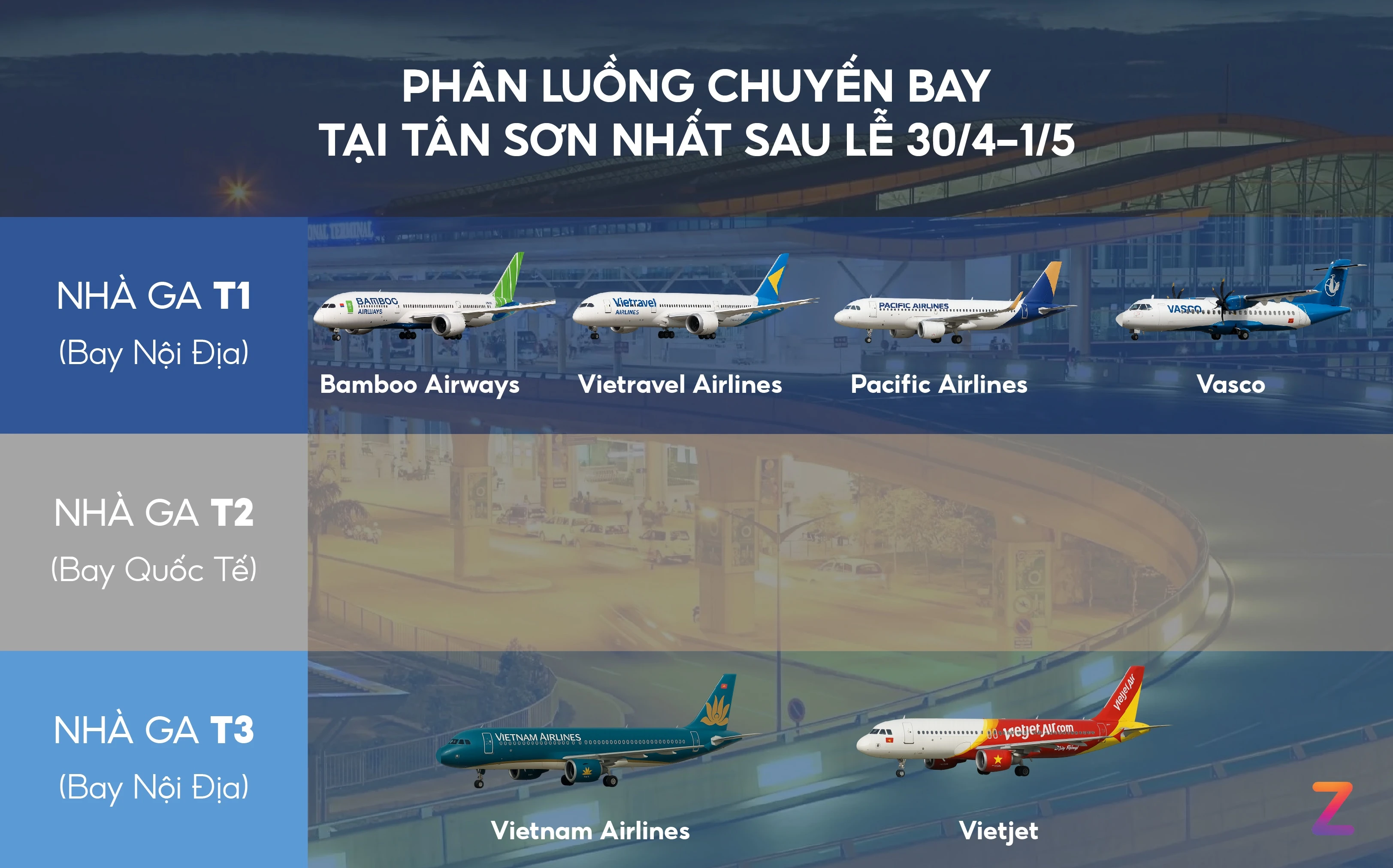
This is the question that confuses travellers the most, because airlines have been moving in stages. According to official updates from airport authorities and major Vietnamese media, by late 2025:
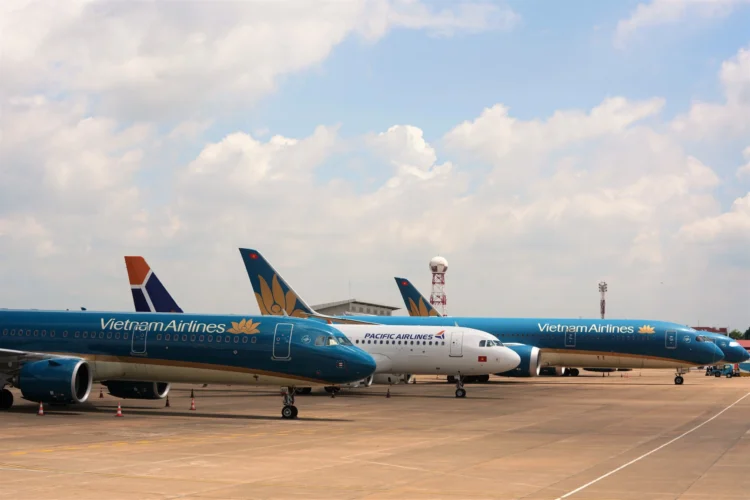
- Vietnam Airlines operates its domestic network from T3
- Pacific Airlines (a Vietnam Airlines affiliate) uses T3
- VASCO uses T3 and T1
- Bamboo Airways has moved domestic operations to T3
- Vietravel Airlines also uses T3
- Vietjet Air continues to operate domestic flights from T1, not T3
Earlier in 2025, some plans mentioned Vietjet relocating to T3, but more recent official reports confirm that Vietjet domestic flights remain at T1 while the other five domestic carriers operate from T3.
Because airline allocations can change over time, the safest approach is:
- Check your ticket and booking confirmation carefully
- Look for the words T1, T2 or T3 next to “Departure Terminal”
- If you are still not sure, check your airline’s website or app close to your travel date
How to get to Tan Son Nhat Airport Terminal 3?
The good news is: if you just tell a taxi driver “Ga T3 – nội địa” or select Terminal 3 in your ride hailing app, they will know where to go.
Here are your main options, based on guidance from the airport and Ho Chi Minh City’s transport authorities.
1. From other terminals (T1 or T2)
If you arrive at the wrong terminal or are connecting from an international flight:
- Free shuttle bus
Tan Son Nhat operates a free shuttle bus between T1, T2 and T3, usually every 15 to 20 minutes. The bus stops are signposted; you can also ask airport staff “shuttle bus to T3”.
- Taxi or ride hailing
For heavy luggage or if you just missed the shuttle, you can take a short taxi or Grab ride between terminals. It is a very quick hop but can be useful in hot weather or if you are in a hurry.
2. From downtown Ho Chi Minh City
From District 1 and central areas, a typical route is: Nam Ky Khoi Nghia Street → Nguyen Van Troi → past Hoang Van Thu Park → Tran Quoc Hoan Street → T3.
You do not need to remember this exactly. Just:
- Use a reputable taxi company or ride hailing app
- Choose T3 as your destination
- Allow extra time in rush hour, as traffic around the airport can still be heavy
3. Public buses
If you like public transport, there are several bus routes that serve Tan Son Nhat, and the city has approved a plan to connect around 20 bus routes directly to T3.
Key routes mentioned by the Department of Transport and official press include:
- Bus 109: airport to downtown
- Bus 152: airport to Trung Son residential area
- Bus 72-1: airport to Vung Tau
- Bus 103 and others connecting different districts and bus stations
Not all information is tourist friendly at the moment, so if you are new to the city and carrying big luggage, taxi or ride hailing is usually the easiest option. Buses are more interesting if you are budget focused or already comfortable in Ho Chi Minh City.
Follow My Vietnam Tours for Vietnam Travel Updates
T3 is one piece of a bigger story: Vietnam is investing heavily in airports, roads and tourism infrastructure to make travel smoother for both locals and visitors.
If you will be flying around Vietnam in 2026, having updated local information can save you a lot of stress at the airport doors.
For more practical updates like this, plus inspiration for where to go after you land at T3 – from Mekong Delta day trips to long private itineraries across the country – follow My Vietnam Tours on social media and through our content channels.
We keep track of the changes so you can focus on enjoying the journey.