

Long Thanh International Airport: Ho Chi Minh City’s New Airport and What You Need to Know
If you are planning a trip to Ho Chi Minh City in the next couple of years, you are going to hear a new name over and over again: Long Thành International Airport.
For decades, visitors have flown into Tan Son Nhat International Airport in the middle of the city. From 2026 onward, Vietnam is gradually shifting a big part of its international traffic to Long Thành. That is exciting news, but it also raises a lot of questions for travellers:
- Where exactly is this new airport?
- How far is it from the city?
- When will it really open?
- Will my flight land there or at Tan Son Nhat?
Let’s break it down in simple terms, using what Vietnam’s government and official press have announced so far.
Where is Long Thanh International Airport?
Long Thanh International Airport is being built in Long Thanh District, Dong Nai Province, to the east of Ho Chi Minh City. It is part of the broader Southern Key Economic Region, not just a local airport for the city.
Official and press reports describe it as a major national project, located about 40 to 60 kilometres from downtown Ho Chi Minh City, depending on where you measure from.
In other words:
- It is not inside the city like Tan Son Nhat.
- It is in a neighbouring province, connected to Ho Chi Minh City by expressways and new link roads.
When it is fully completed, Long Thanh is planned to handle up to 100 million passengers a year in three phases, making it the largest airport in Vietnam.
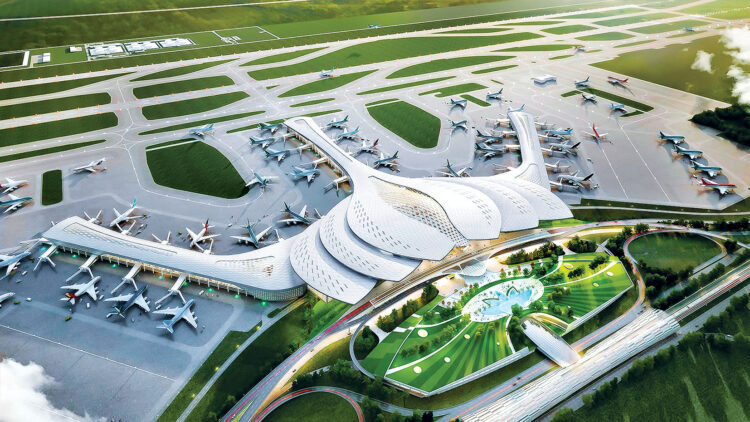
Why was it built when Ho Chi Minh City already had Tan Son Nhat Airport?
If you have ever landed at Tan Son Nhat during a busy period, you already know one big part of the answer: Tan Son Nhat is crowded.
Over the past years, official sources have repeatedly pointed out a few key facts:
- Tan Son Nhat sits in the middle of a dense urban area and has very limited room to expand.
- It has been operating beyond its original design capacity, putting pressure on runways, terminals and surrounding roads.
- At the same time, Vietnam’s aviation market has been growing quickly, especially international travel to the south of the country.
Long Thanh is the long term answer to all of this. According to the Government Portal and official press:
- Phase 1 of Long Thành is designed for 25 million passengers and 1.2 million tonnes of cargo a year.
- Later phases will take that to 50 million, then 100 million passengers annually.
Vietnamese authorities also stress that Long Thành is not just “Tan Son Nhat number 2,” but a regional gateway for the entire south, supporting trade, tourism and logistics for Ho Chi Minh City, Dong Nai and other provinces. So in simple terms: Tan Son Nhat is overloaded and boxed in. Long Thanh is the new, much larger door to the south of Vietnam.

Long Thanh Airport accessibility
Of course, a big airport in the middle of nowhere would be a problem. That is why the government has been working on a whole network of roads and future rail links around Long Thành.
A few key pieces from official and major press reports:
- The existing Ho Chi Minh City – Long Thanh – Dau Giay Expressway is being widened, with most of the work scheduled to be basically finished in 2026, the same time Long Thành is expected to start commercial operations.
- Two new connector roads, called T1 and T2, link the airport to national routes and several expressways. T1 connects the airport to National Route 51 and multiple expressways, while T2 runs parallel to the Bien Hoa – Vung Tau expressway. Both are designed as multi lane roads and are under construction with completion targeted around early 2026.
- Additional major projects, such as ring roads and bridges around Ho Chi Minh City, are being financed to create a strategic transport corridor between the city and Long Thành, easing pressure on existing bridges and opening new logistics routes.
There are also plans and proposals for future rail or metro lines connecting the city to the airport. These are still in the study and investment proposal stage, so they will not be ready for the first years, but they show that the long term vision is a multi mode network, not just cars and buses.
For travellers, this all means that by the time you fly into Long Thanh, you should have several road options, usually involving expressways rather than small city streets.
How far is Long Thanh Airport from Ho Chi Minh City?
This is the question travellers care about most: “How long will it actually take me to get from the airport to my hotel in District 1?”. Official and press coverage puts Long Thành at about 60 kilometres from downtown Ho Chi Minh City and around 70 kilometres from Tan Son Nhat.
What does that mean in practice? With completed expressways and connector roads, the goal is a smooth drive of roughly one to one and a half hours in normal conditions. In reality, travel time will depend heavily on traffic, time of day and how quickly all those connecting projects are finished and operating well together. Some local commentators have even voiced concerns that if the roads are not ready, the trip could be much longer at peak times, which is why so much public attention is on road progress right now.
So the honest answer today is:
- Distance: around 60 kilometres from the city centre.
- Time: the plan is to keep it to around an hour or a bit more by expressway, but you should always allow an extra buffer, especially in the first few years.
Is Long Thanh Airport opening in 2026?
Short answer: Yes, that is the plan, but it is phased.
Several official and major outlets give a consistent picture:
- The Prime Minister and Airports Corporation of Vietnam (ACV) have repeatedly stated the goal of putting Phase 1 of Long Thành into commercial operation in 2026.
- Government and state media note that the airport has already completed major components, including runways and parts of the terminal, and that it has welcomed its first test and inaugural flights in December 2025.
- Some economic analyses mention that the airport may start operating from around September 2026, with full benefits for the airport operator expected after 2027.
What this means for you if you are planning a 2026 trip?
If you fly in early 2026, many international routes may still be using Tan Son Nhat, depending on airline decisions and readiness of ground transport. As you move into late 2026 and beyond, more and more routes will start to use Long Thanh, especially long distance international flights.
Always check your ticket and booking information carefully. Airline and airport names will be clearly listed.
What airlines will fly from Long Thanh Airport?
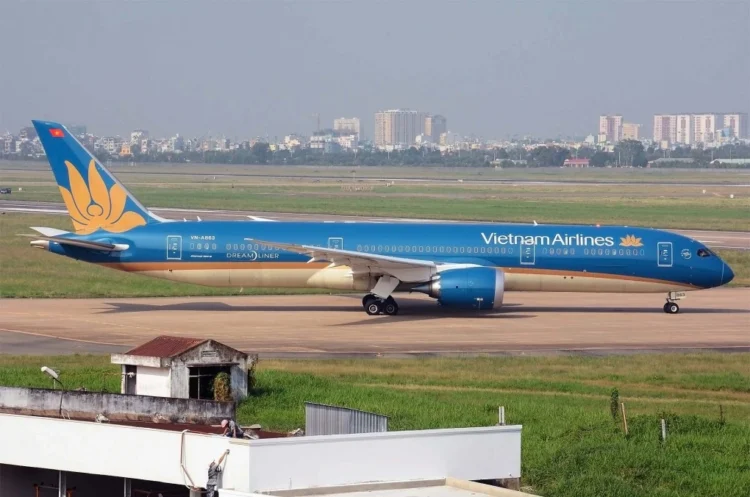
The very first passenger flights into Long Thanh in December 2025 were operated by Vietnam Airlines, Vietjet Air and Bamboo Airways, according to official reports on the inaugural day.
Looking ahead, the plan approved by aviation authorities and reported in major outlets looks like this:
- From summer 2026, airlines will be encouraged to move long haul international services from Ho Chi Minh City to Long Thanh, especially flights to Europe, the Americas and Oceania.
- Between late 2026 and 2027, more routes to regions such as Africa, the Middle East, South Asia and Central Asia will be added at Long Thanh.
- From 2027 onward, most international routes, including a large share of flights to Northeast and Southeast Asia, are expected to gradually move to Long Thành, while Tan Son Nhat focuses on domestic flights and some shorter regional routes under one thousand kilometres.
In practical terms, you can expect all major Vietnamese carriers to use Long Thành. International airlines flying long distances to Ho Chi Minh City will gradually switch their schedules to the new airport once it is fully ready. For a few years, both airports will operate side by side, so always double check which one is on your ticket before you book hotels and transfers.
Stay updated with My Vietnam Tours
Long Thanh International Airport is one of the biggest changes to Vietnam travel in decades. It will eventually make it easier for you to fly directly into the south of the country on modern routes and through a larger, more comfortable terminal.
But during the transition phase from 2026 to 2027, there will be a lot of moving pieces: new flight schedules, shifting routes, fresh transport options and updated travel times from airport to city.
If you want to keep up with what is actually happening on the ground, not just the big announcements, follow My Vietnam Tours.